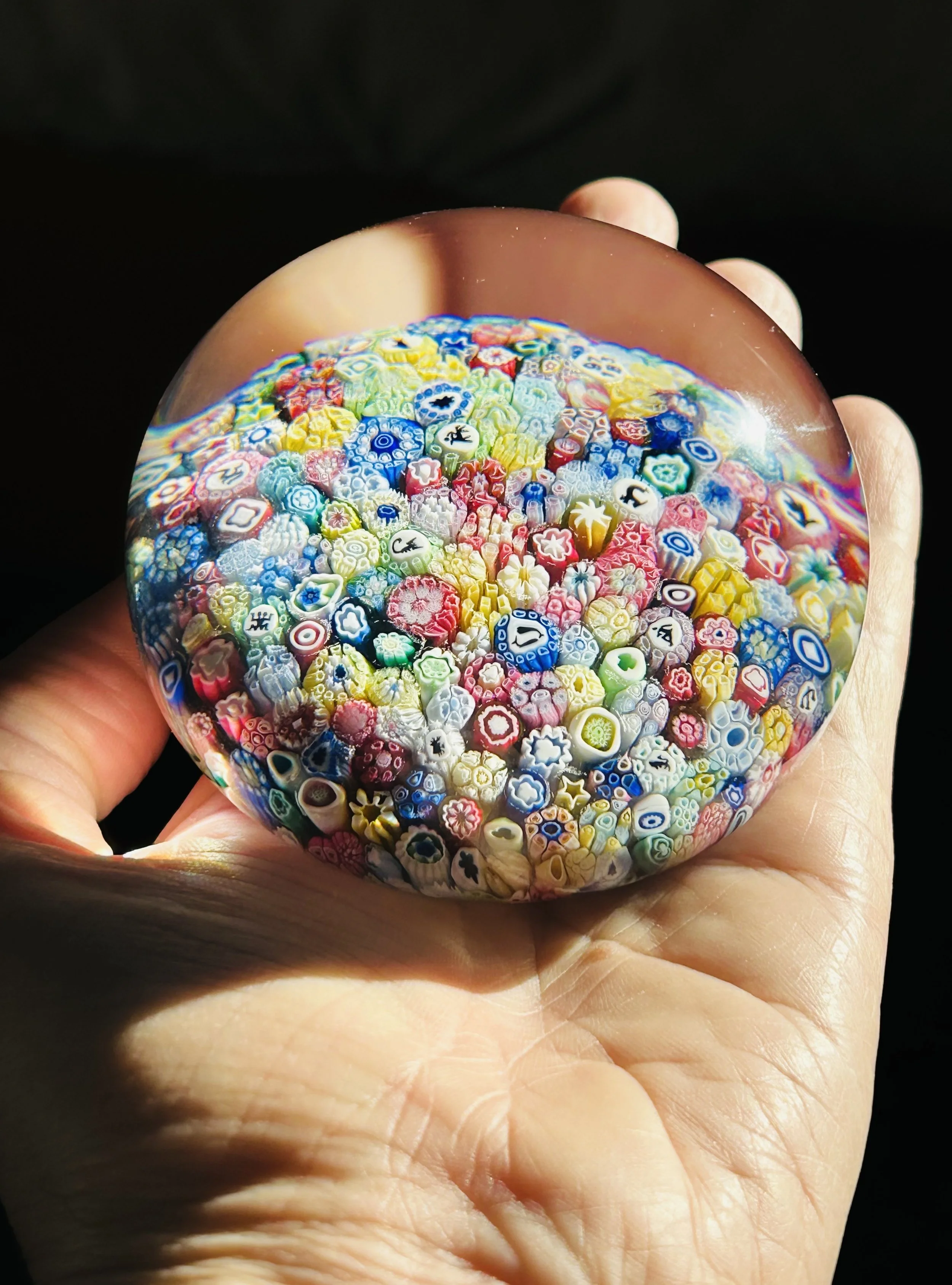
Weight is one of the least discussed qualities in design. Yet it is often one of the first things we register when encountering an object.
Pick up a piece of crystal, a dense ceramic vessel, or a carved wooden sculpture, and the sensation is immediate. The object has presence. Not only visually, but physically.
This sense of weight is rarely accidental.
Materials such as stone, hardwood, glass or metal carry an inherent density that designers and makers have long understood how to use. A heavy base stabilises a lamp. A thick glass wall deepens the way light moves through a vessel. A solid wooden form anchors a sculpture in space.
Weight contributes to authority.
It also influences how we perceive permanence. Objects that possess material density tend to feel more enduring. They resist the sense of disposability that lighter, more transient materials can sometimes suggest.
Many of the most compelling objects balance weight with clarity of form. A block of crystal cut with disciplined geometry. A ceramic bowl whose mass is perfectly distributed. A piece of furniture where solid timber defines the structure.
In these works, weight is not merely physical - it becomes part of the aesthetic language.
The object occupies space with quiet confidence. And often, without saying very much at all, it tells us – with quiet authority – that it is meant to last.