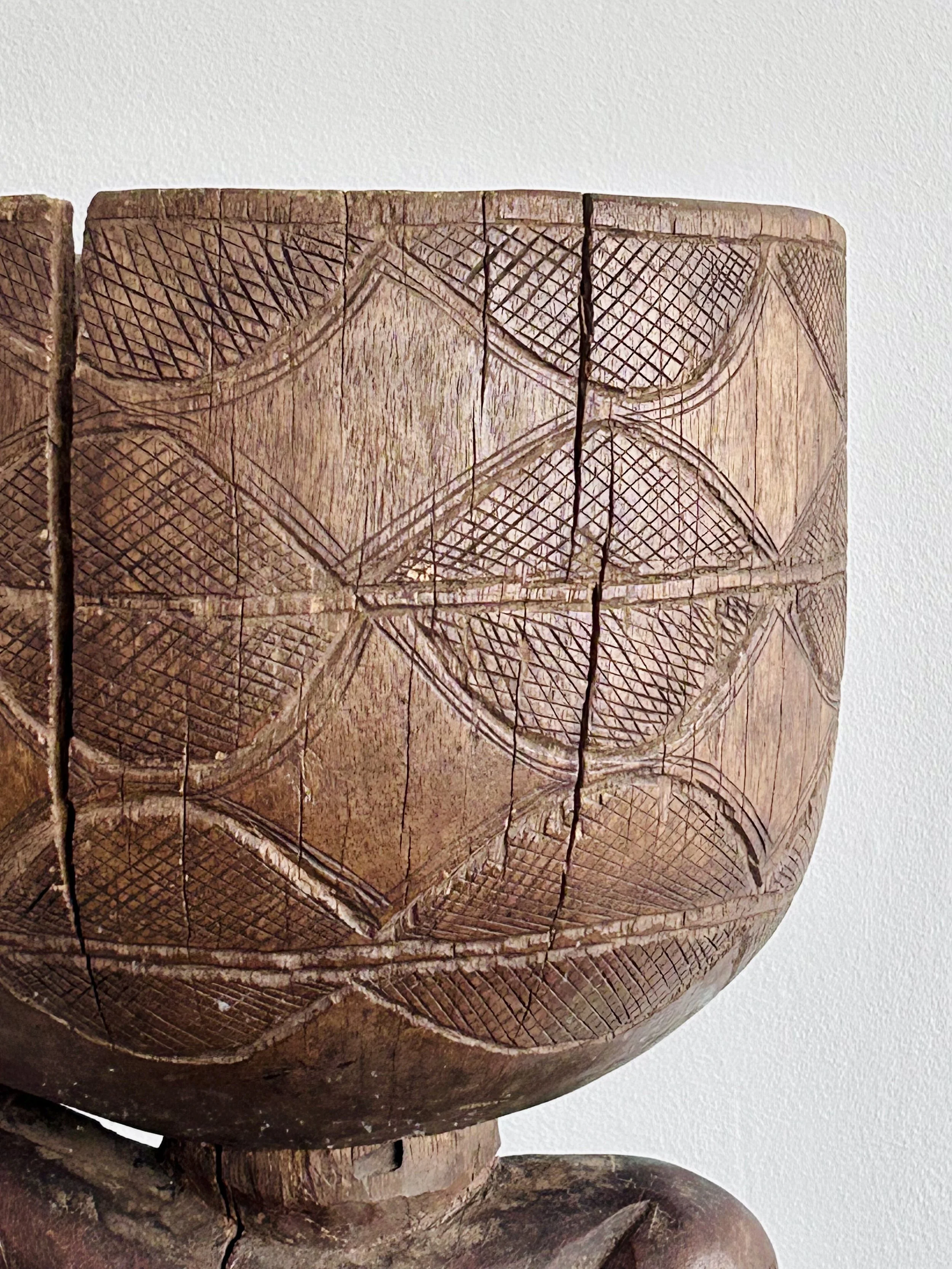
Time leaves a mark on everything. In the language of objects, we call that mark: patina.
In the world of design, few words are used more often - or more loosely.
In its original sense, patina describes the surface change that materials undergo through time, exposure and use. Bronze darkens and softens. Wood deepens in tone. Leather develops a subtle sheen through repeated handling. Even stone acquires a quiet smoothness where contact has worn its surface.
These changes are not applied decoration. They are the visible record of time.
For collectors and designers, patina often signals authenticity. It suggests that an object has lived a life: handled, used, exposed to light, perhaps even repaired. The surface begins to tell a story that newly made objects cannot yet carry.
This is one reason patina is often associated with value. Objects that have aged well tend to reveal qualities that were not fully visible when they were new. Grain emerges more clearly in wood. Metals develop tonal depth. Ceramics soften in colour where glazes have settled over decades.
Time, in this sense, becomes a collaborator.
Yet today, the word is used rather casually. In contemporary design language almost any visible ageing - scratches, wear, irregularity - can be described as patina. Occasionally it is even simulated deliberately, as surfaces are artificially distressed to suggest age.
True patina is more subtle than this.
It rarely appears dramatic or theatrical. Instead, it emerges gradually through interaction between material, environment and use. The result is often quiet: a softened edge, a deepened tone, a surface that reflects light differently than it once did.
Recognising this difference requires attention. An experienced eye begins to distinguish between surfaces that have genuinely evolved and those that have simply been altered. One carries the calm authority of time. The other often feels contrived.
This is perhaps why patina resonates so strongly today. In an era dominated by newness and constant replacement, objects that bear the traces of time suggest a different, honest relationship with material. They remind us that value can accumulate slowly.
Patina, in the end, is less about age than about continuity.
It is what happens when materials are allowed to live long enough to reveal their character.