Some of the most enduring objects in design history share a surprising characteristic: they do less, not more.
Where many traditions pursue ornament or spectacle, Japanese design has long valued restraint - an approach in which reduction reveals rather than diminishes meaning. Form is pared back until what remains carries clarity, balance and quiet authority.
At the heart of this sensibility lie ideas such as wabi-sabi - the appreciation of imperfection and transience - and ma, the space between things. Together they encourage a way of seeing in which absence is as important as presence, and where simplicity allows materials and proportion to speak for themselves.
Few objects express this better than the Noh theatre mask. Carved with extraordinary economy, its expression appears almost neutral. Yet the slightest shift in light or angle reveals a surprising emotional range - serenity, melancholy, even quiet joy. What appears restrained is, in fact, deeply expressive.
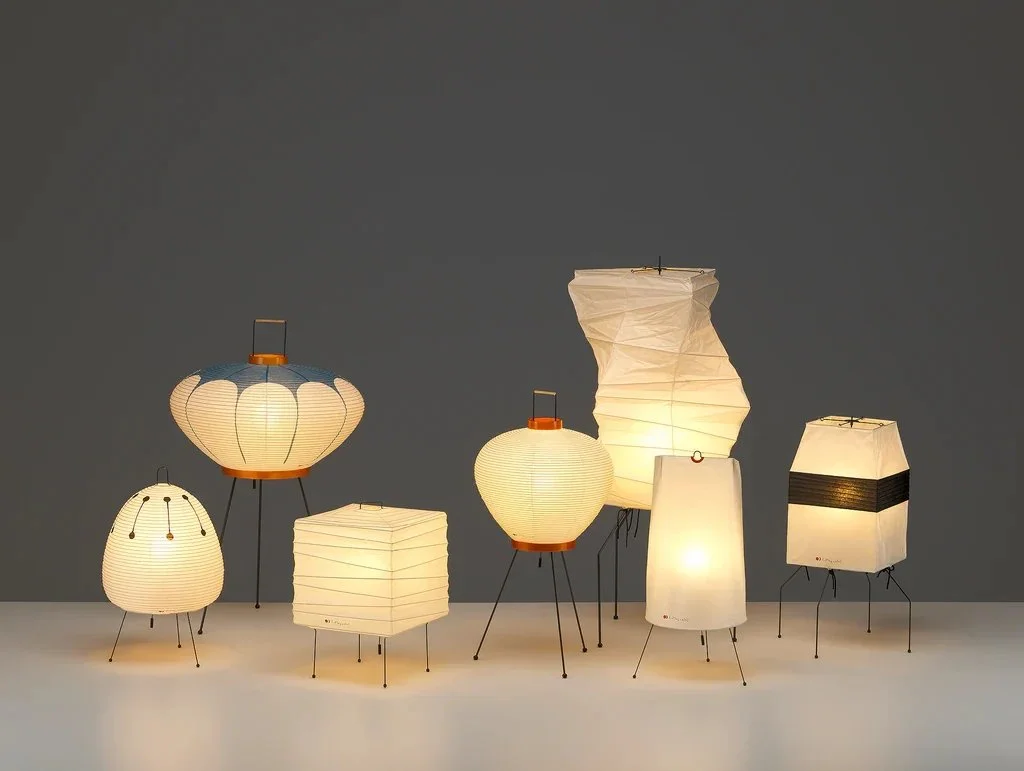
This same principle can be found across Japanese craft and design. A tea bowl whose irregular glaze records the movement of the kiln. A bamboo basket whose structure is both delicate and precise. A paper lantern that transforms fragile materials into soft, architectural light.
Isamu Noguchi’s Akari lamps offer a particularly elegant example. Inspired by traditional lanterns, Noguchi reduced the form to its essentials: paper, light and air. The result is an object that feels almost weightless, yet possesses a sculptural presence that has endured for decades.
Architecture expresses the idea equally clearly. At Kyoto’s Katsura Imperial Villa, sliding screens, tatami floors and open verandas dissolve the boundary between interior and landscape. Space is not filled but composed, allowing light, proportion and natural materials to define the experience.
What emerges from these traditions is a deeper understanding of restraint. It is not austerity or absence. Rather, it is a disciplined confidence - the belief that form, material and proportion are sufficient.
In a world often drawn to novelty and excess, this philosophy offers a quiet counterpoint. The most compelling objects rarely demand attention. Instead, they reveal their qualities gradually, rewarding patience and close observation.
It is perhaps for this reason that works shaped by restraint tend to endure. Their clarity allows them to move across cultures and generations without losing relevance.
Less, it turns out, is not a limitation. It is a form of strength.