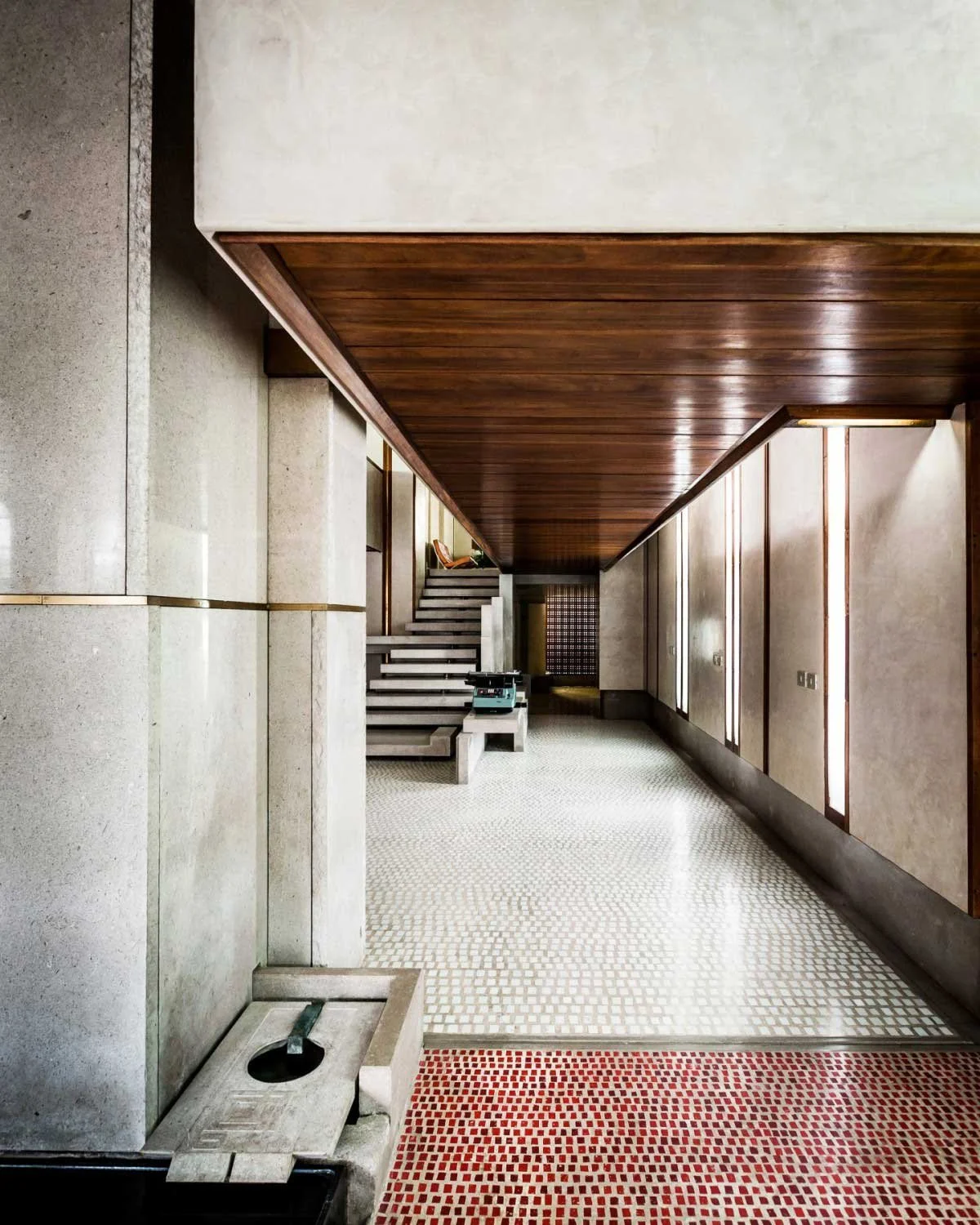
Few design cultures have shaped the modern world as profoundly as Italy’s.
Where some modernist traditions pursued strict rationalism, Italian designers often approached objects with a sense of warmth, humour and expressive freedom. Function mattered deeply - but so too did emotion.
This balance between rigour and vitality can be traced back through Italy’s long artistic heritage. Renaissance craftsmanship, Baroque theatricality and regional artisanal traditions all helped shape a culture in which making has always been taken seriously. When industrial production accelerated in the twentieth century, these traditions did not disappear. Instead, they evolved.
Companies such as Cassina, Zanotta and Artemide collaborated closely with designers, creating objects that were both industrially produced and deeply personal. A chair, a lamp or a typewriter was not merely a product - it was an idea expressed through form.
The work of Gio Ponti offers an early example. His furniture and architecture reveal extraordinary lightness and proportion, balancing elegance with structural clarity. Later designers pushed this spirit further. Achille Castiglioni approached everyday objects with playful ingenuity, transforming humble materials into surprising and intelligent designs.
Even in industrial objects, this sensibility remained visible. Olivetti typewriters, for instance, combined precision engineering with visual elegance, while companies such as Alessi elevated domestic utensils into small works of design theatre.
Perhaps this is what distinguishes Italian design most clearly. It rarely feels purely mechanical. Instead, it retains the touch of the hand, even when produced at scale.
This quality also explains the enduring fascination with Italian objects. They are rarely austere. Instead, they balance discipline with personality - clarity of structure with a certain sensuality of form.
In this way Italian design offers an important counterpoint to the colder narratives of modernism. It reminds us that objects are not only tools, but companions in daily life.
After all, good design solves problems; great design also brings joy.