United States, c. 1950s–60s
American black walnut and woven natural grass, 70 x 53 x 48 (d) cm. Seat height: 42 cm.
Excellent condition. Attribution subject to verification.
One of George Nakashima’s most enduring chair designs, the Grass-Seated Chair distils his approach to furniture into an exceptionally spare composition of timber, line and natural fibre.
A broad, gently sculpted backrest establishes a shallow arc above six slender, splayed spindles, while the substantial walnut seat rails project beyond the woven surface to give the chair its distinctive architectural profile. Below, finely tapered legs and restrained stretchers create an unexpectedly light structure. The contrast between the dark, richly figured walnut and the pale, tactile grass seat is striking.
The construction is characteristically direct and legible: pegged joints remain visible, the spindles enter the timber without unnecessary embellishment, and the hand-woven seat becomes an integral part of the structure rather than simply its upholstery. Small variations in the timber and construction retain the evidence of making by hand.
Designed by Nakashima in the 1940s and produced by his New Hope workshop over subsequent decades, the Grass-Seated Chair embodies the synthesis that defined his work — Japanese craft traditions, American vernacular furniture and a profound respect for the individual character of wood. Its conception also followed Nakashima’s formative years in India, where his work on the Golconde Dormitory at the Sri Aurobindo Ashram brought architecture, craftsmanship and spiritual enquiry into unusually close alignment.
An unusually expressive example, with particularly deep, almost aubergine-brown walnut and strong natural figuring.
Attribution: George Nakashima, Grass-Seated Chair; attribution subject to further verification.

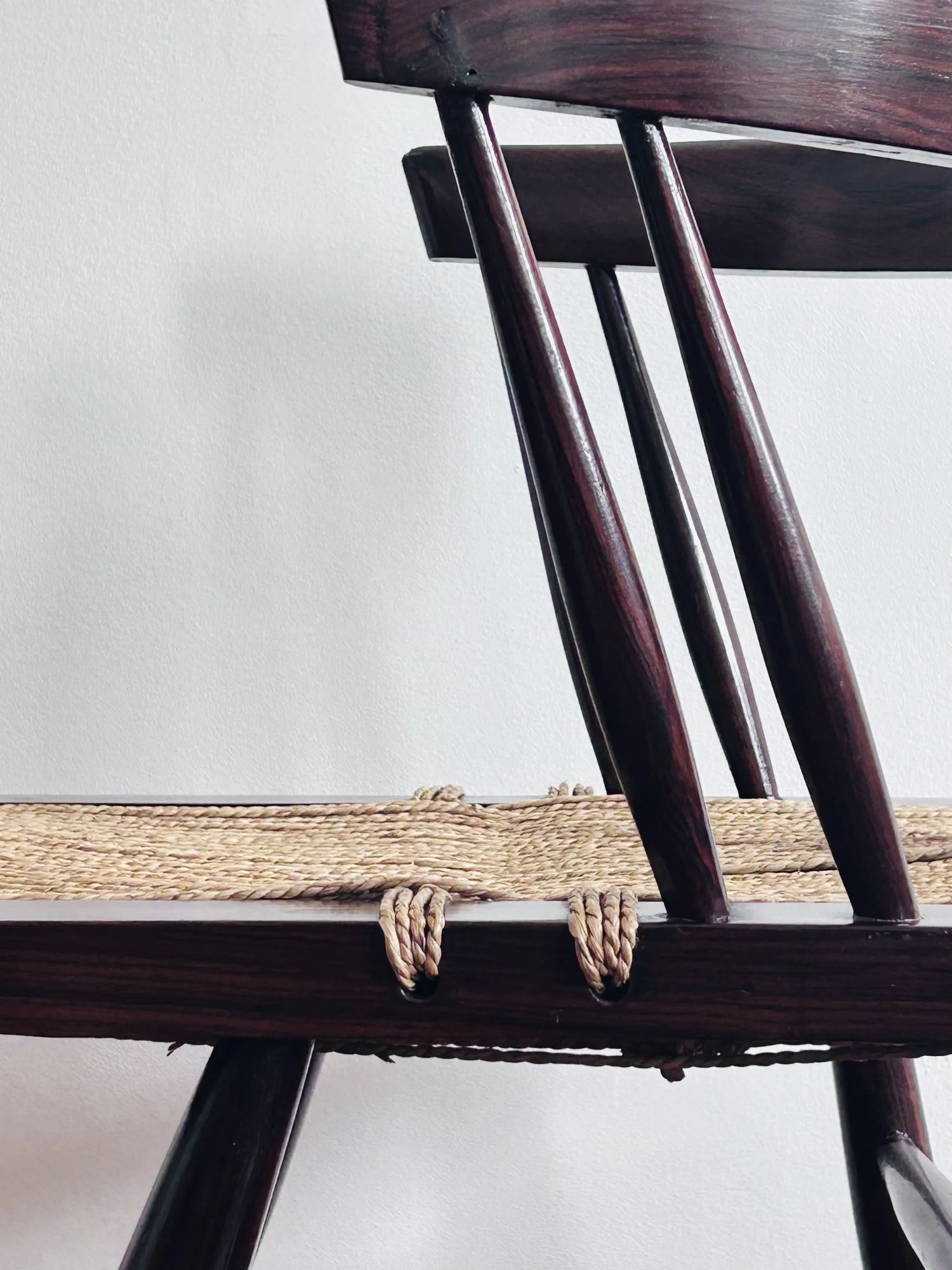 Image 1 of 8
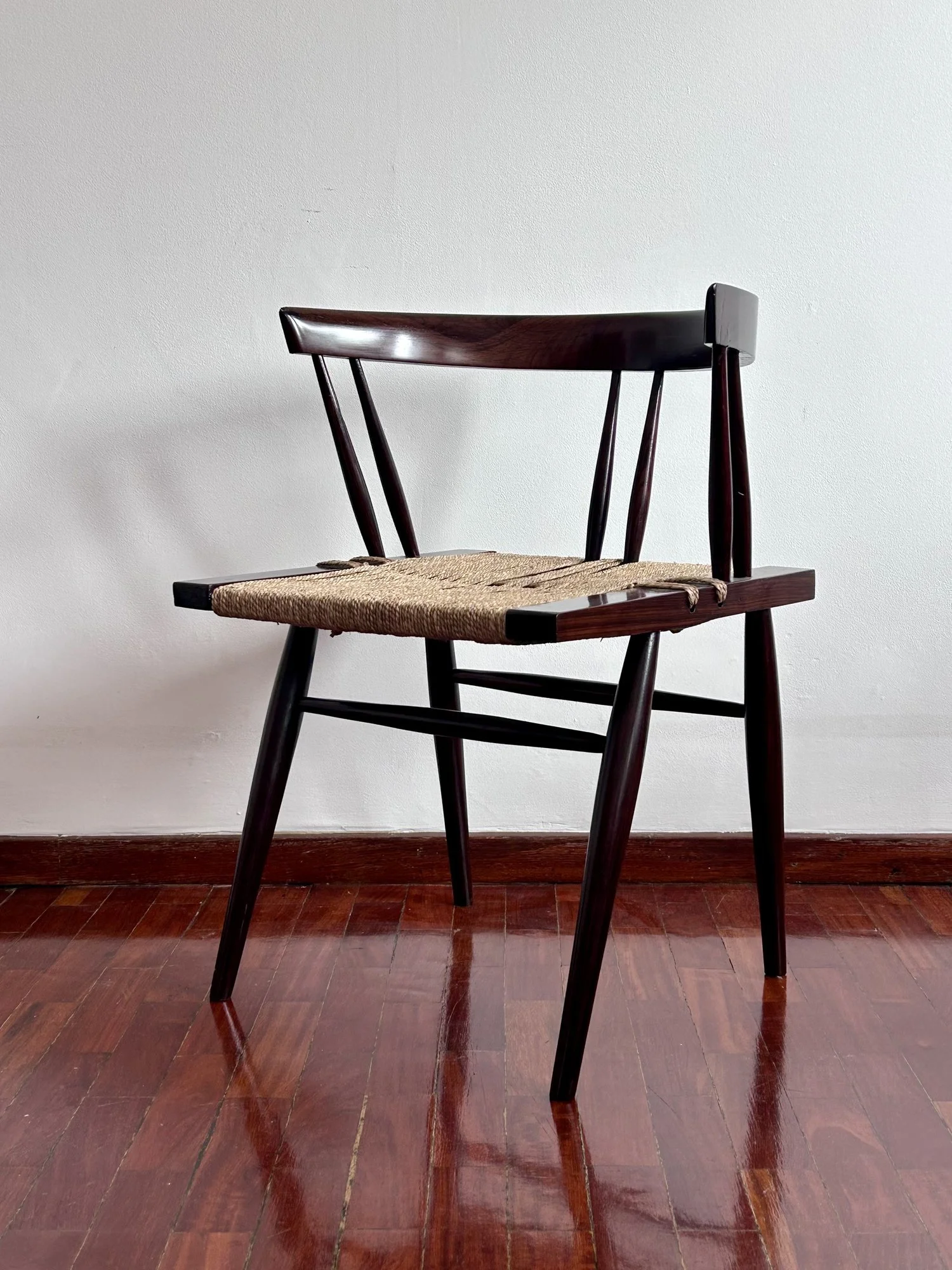 Image 2 of 8
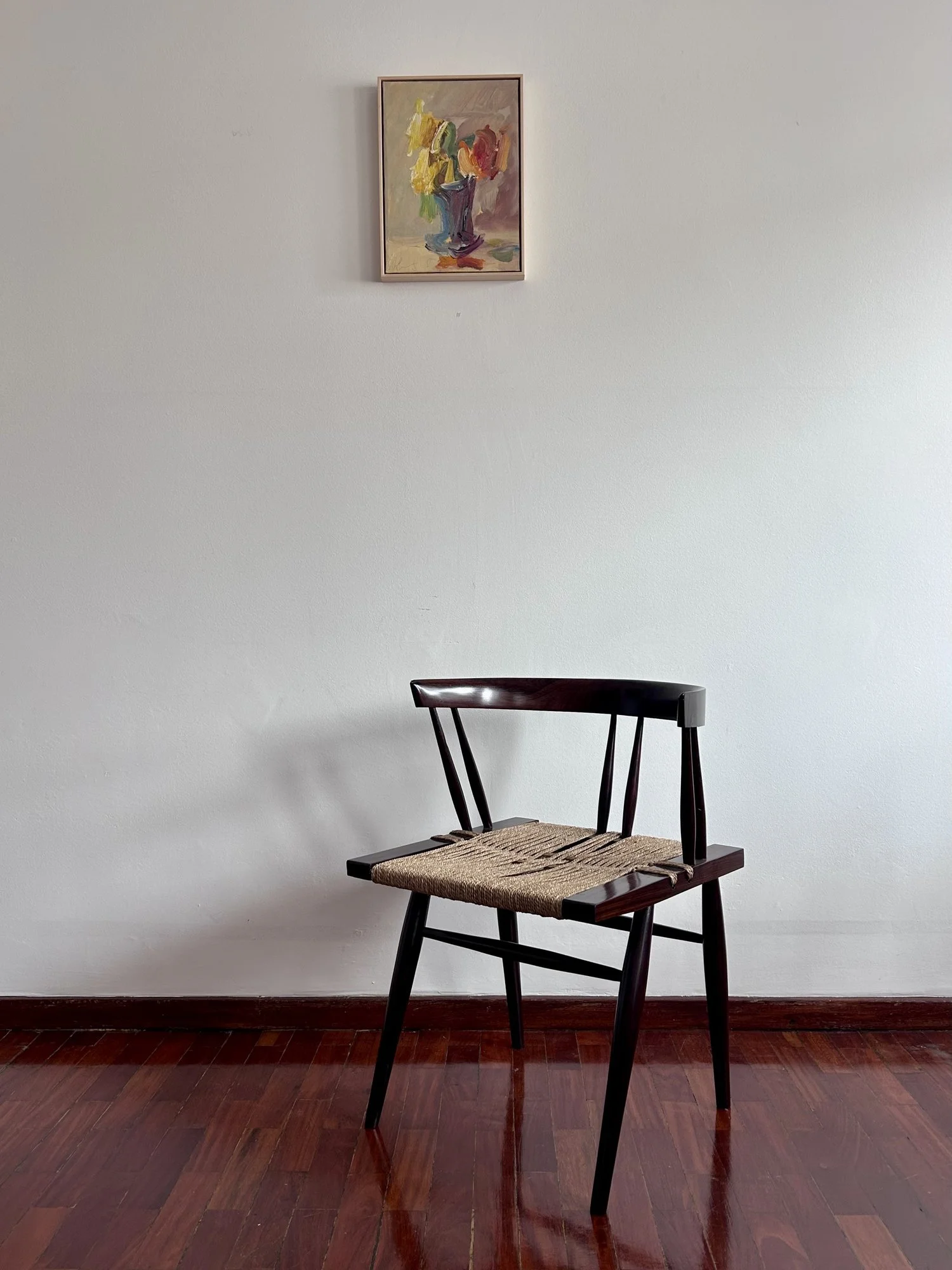 Image 3 of 8
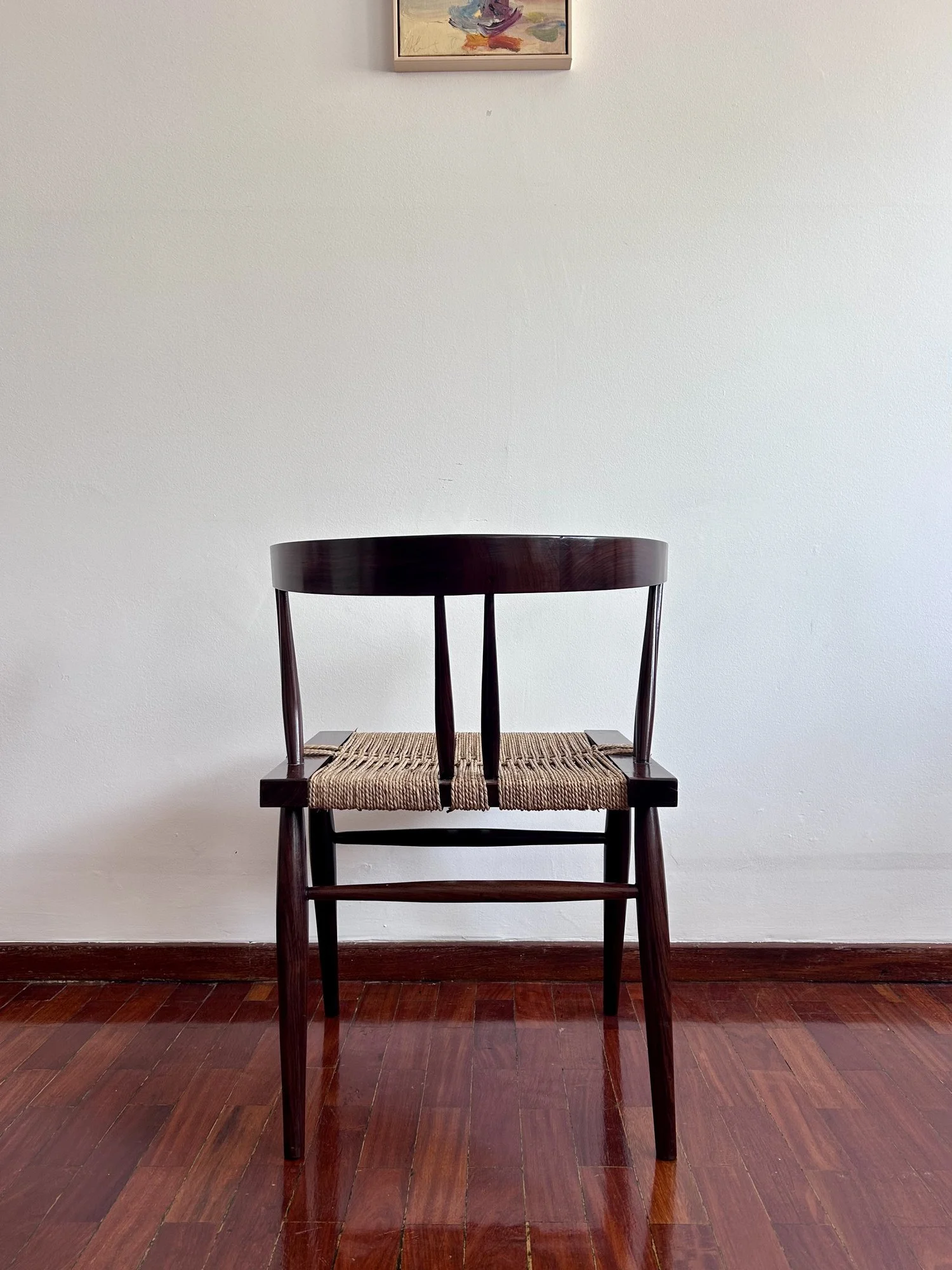 Image 4 of 8
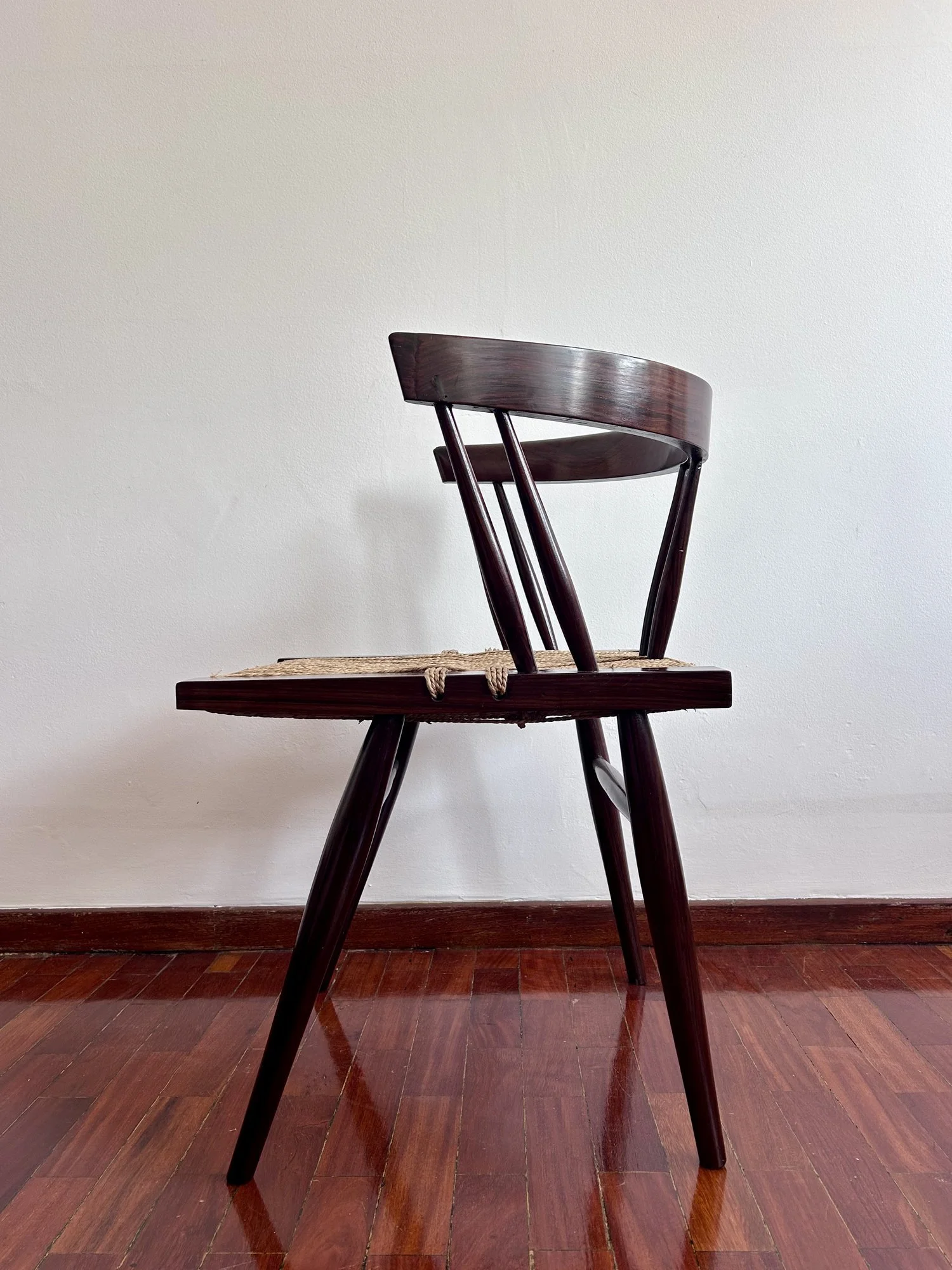 Image 5 of 8
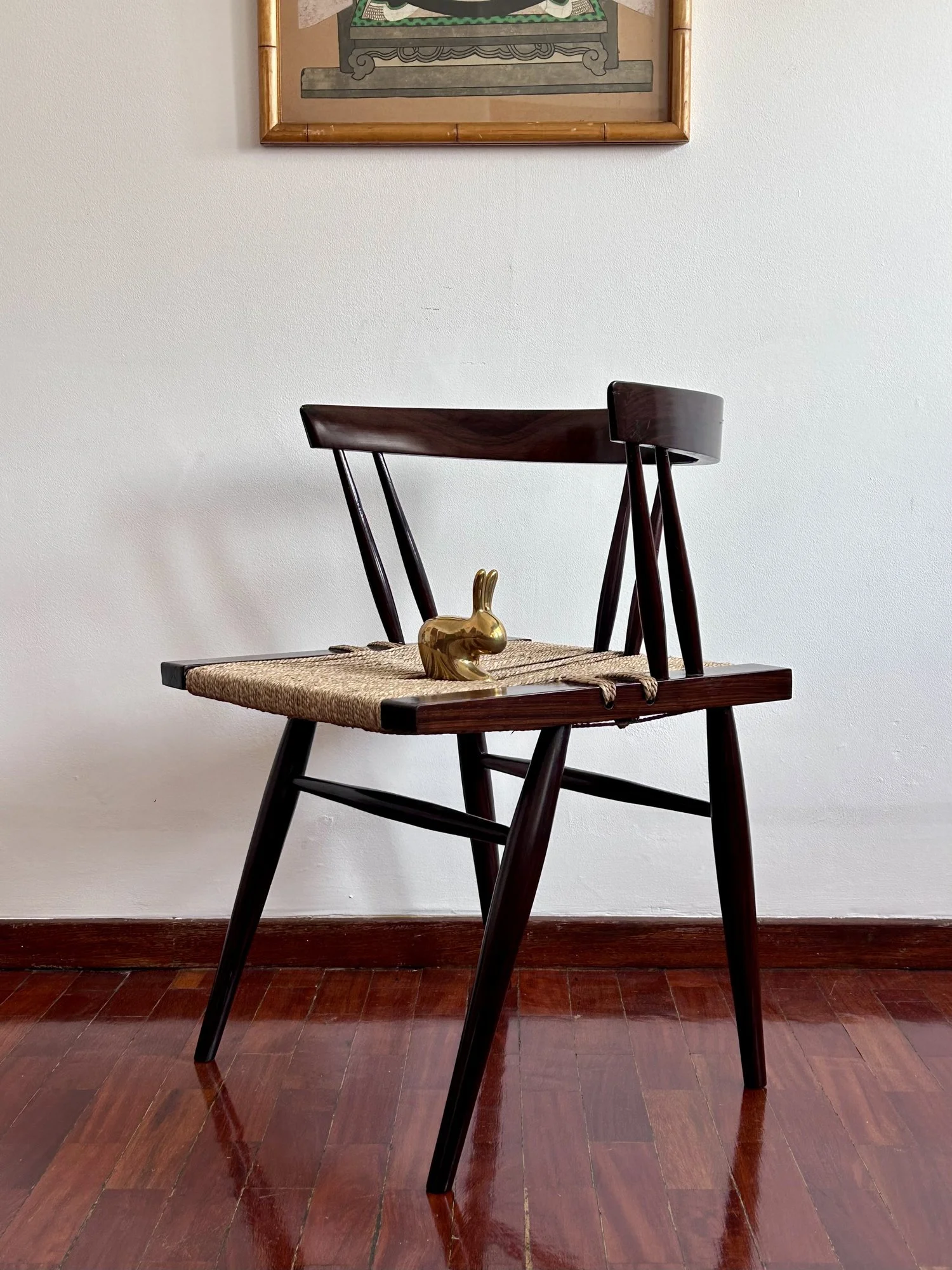 Image 6 of 8
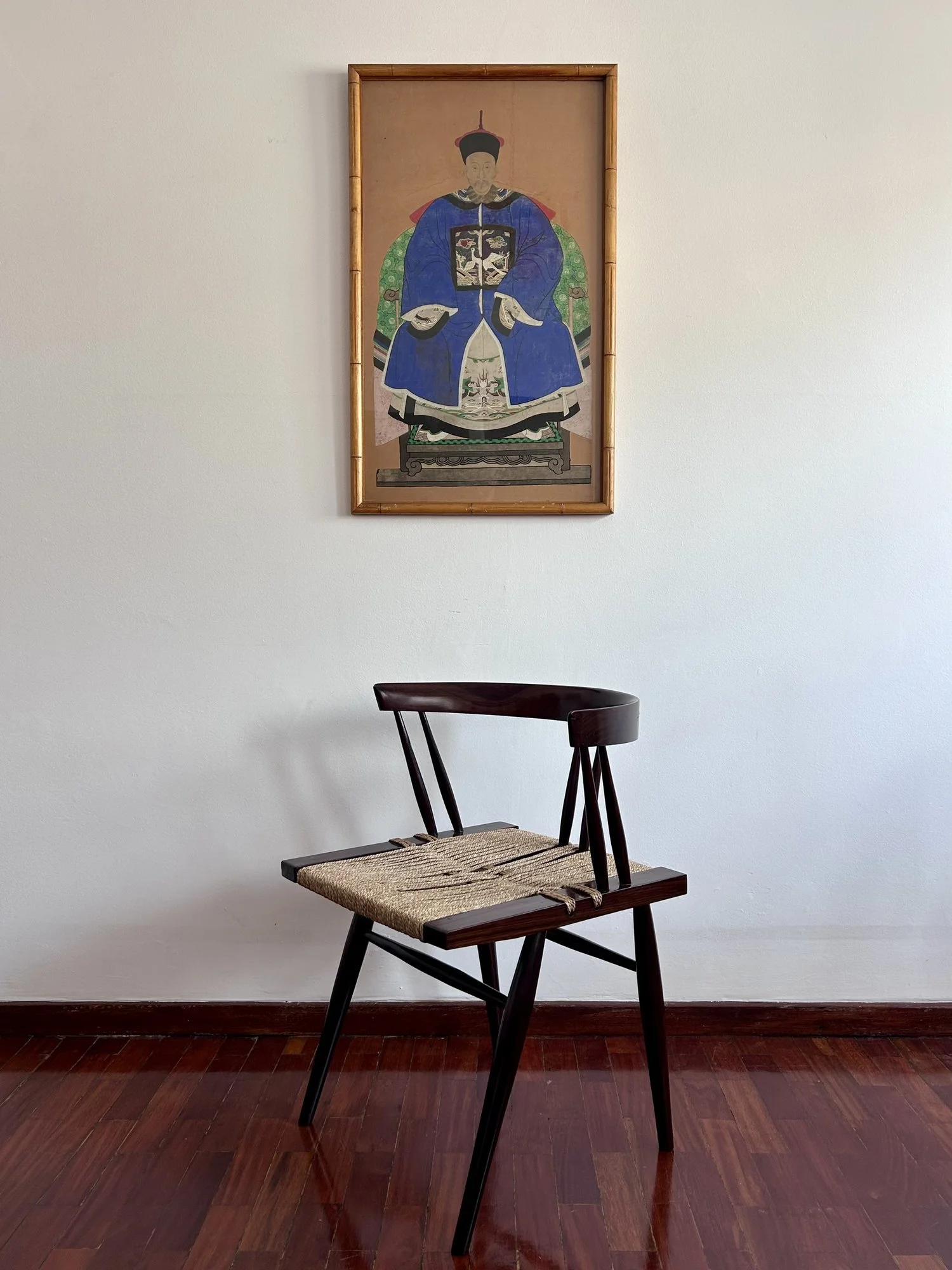 Image 7 of 8
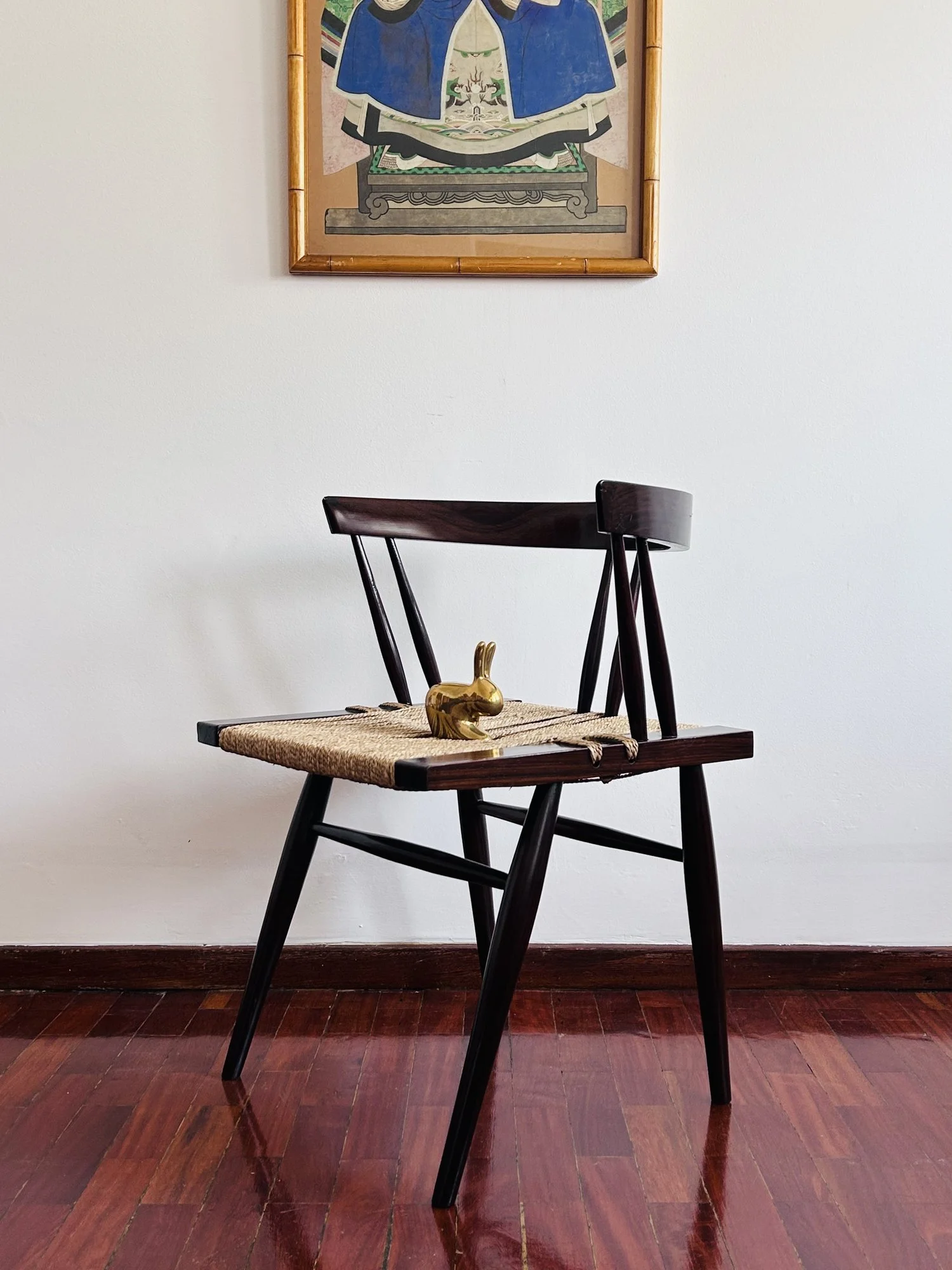 Image 8 of 8