Japan, late 19th to early 20th century
Carved and painted wood, 17 × 10 × 10 cm
Good condition, with wear commensurate with age.
A finely carved Japanese Noh theatre mask depicting Ko-omote, the youthful female character celebrated for her subtlety of expression. The softly modelled features, narrow eyes and gently parted lips give the mask the quiet ambiguity for which Noh theatre is renowned, its character shifting almost imperceptibly with changes in viewing angle.
Carved with remarkable restraint, the form relies on proportion rather than overt expression. Delicate transitions across the cheeks, nose and mouth allow light to animate the surface, lending the mask a quiet sense of vitality.
The painted surface shows the gentle passage of time through areas of wear, fine craquelure and softened pigment, revealing something of the timber beneath. The reverse retains visible carving marks and a warm patina from handling and use, reinforcing its handmade character.
The piece has a disciplined relationship between form, surface and expression. More than a theatrical object, it is a sculptural work of remarkable economy, demonstrating how the smallest adjustments of proportion can convey profound emotional depth.

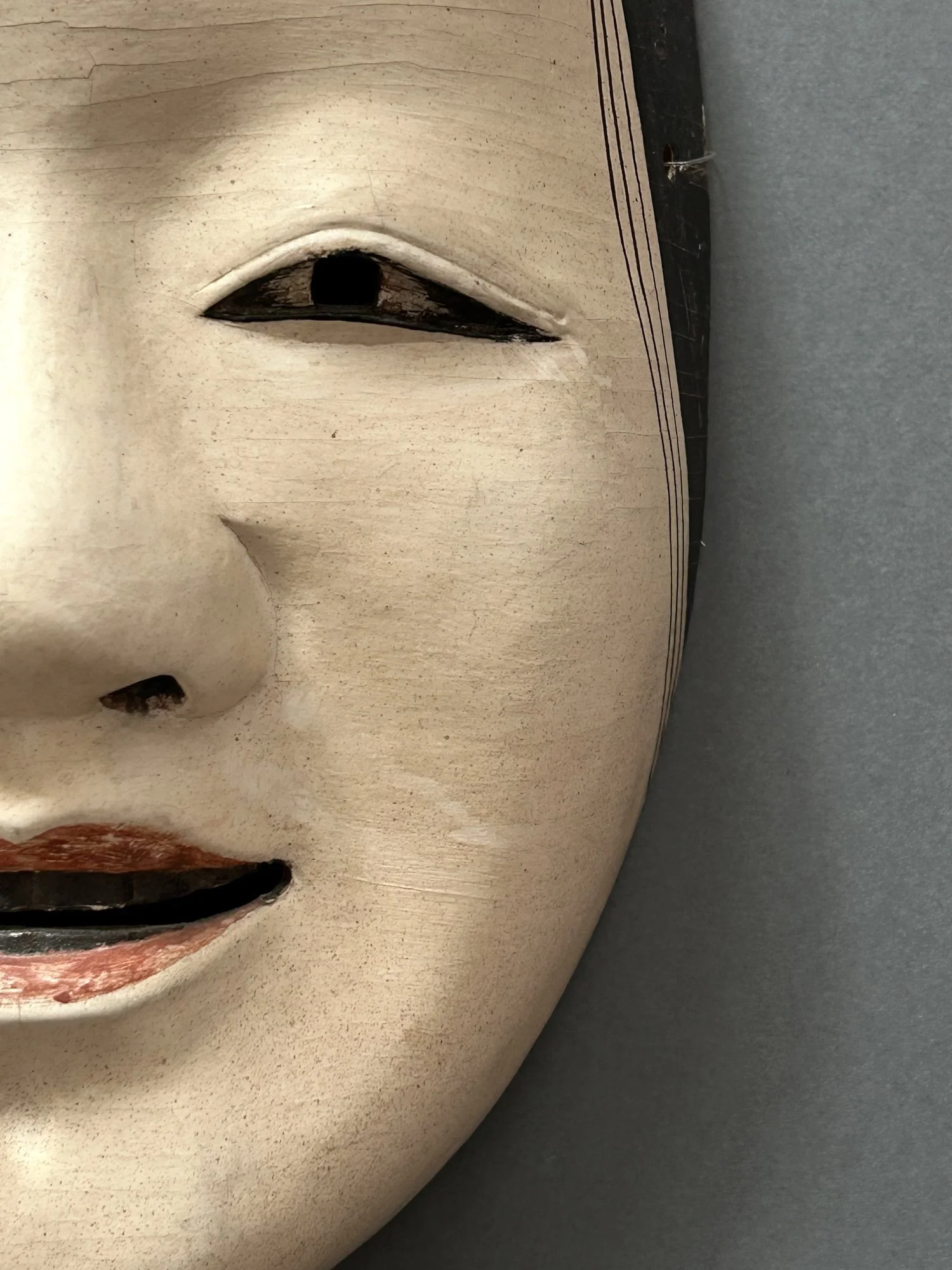 Image 1 of 8
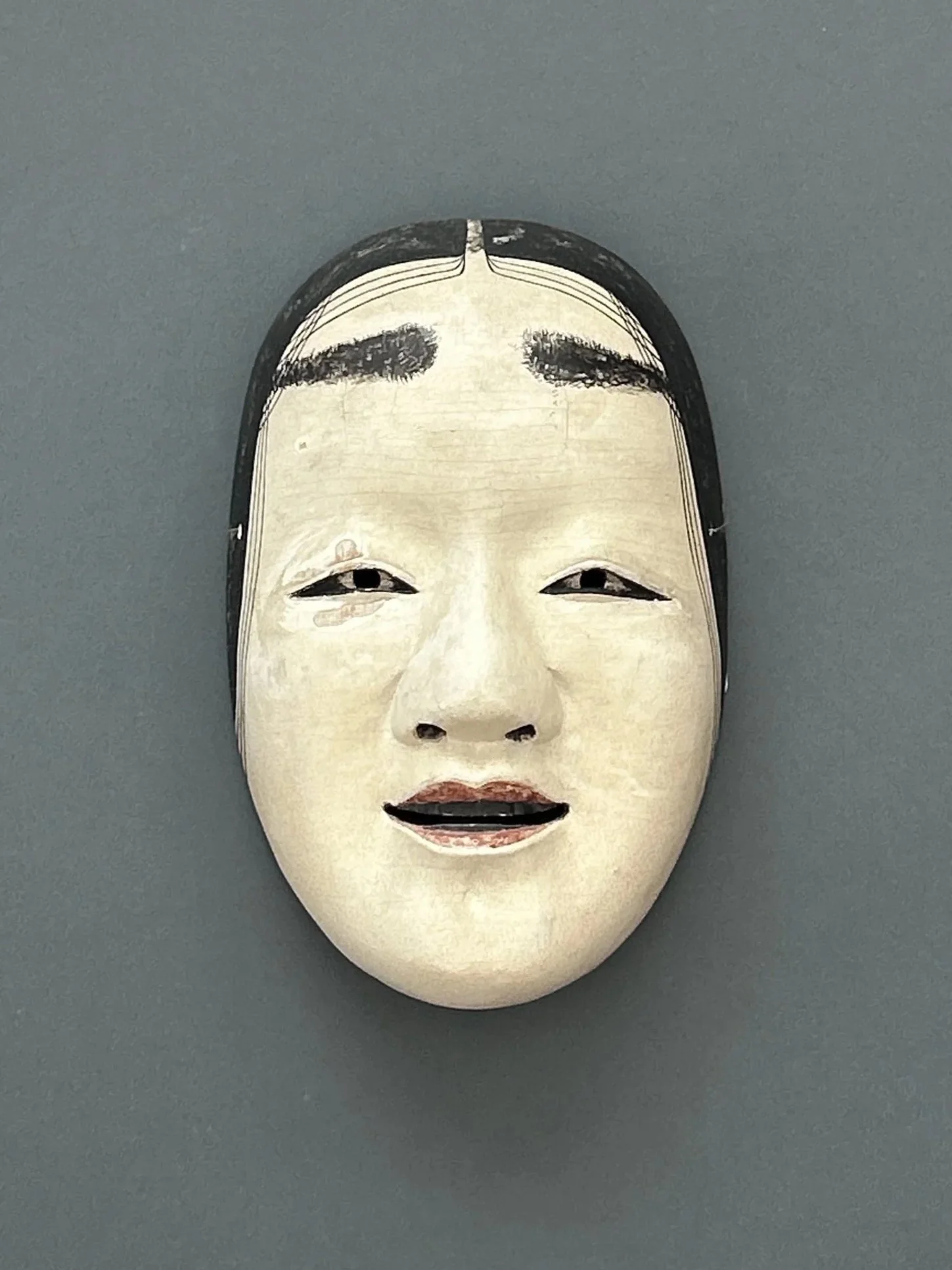 Image 2 of 8
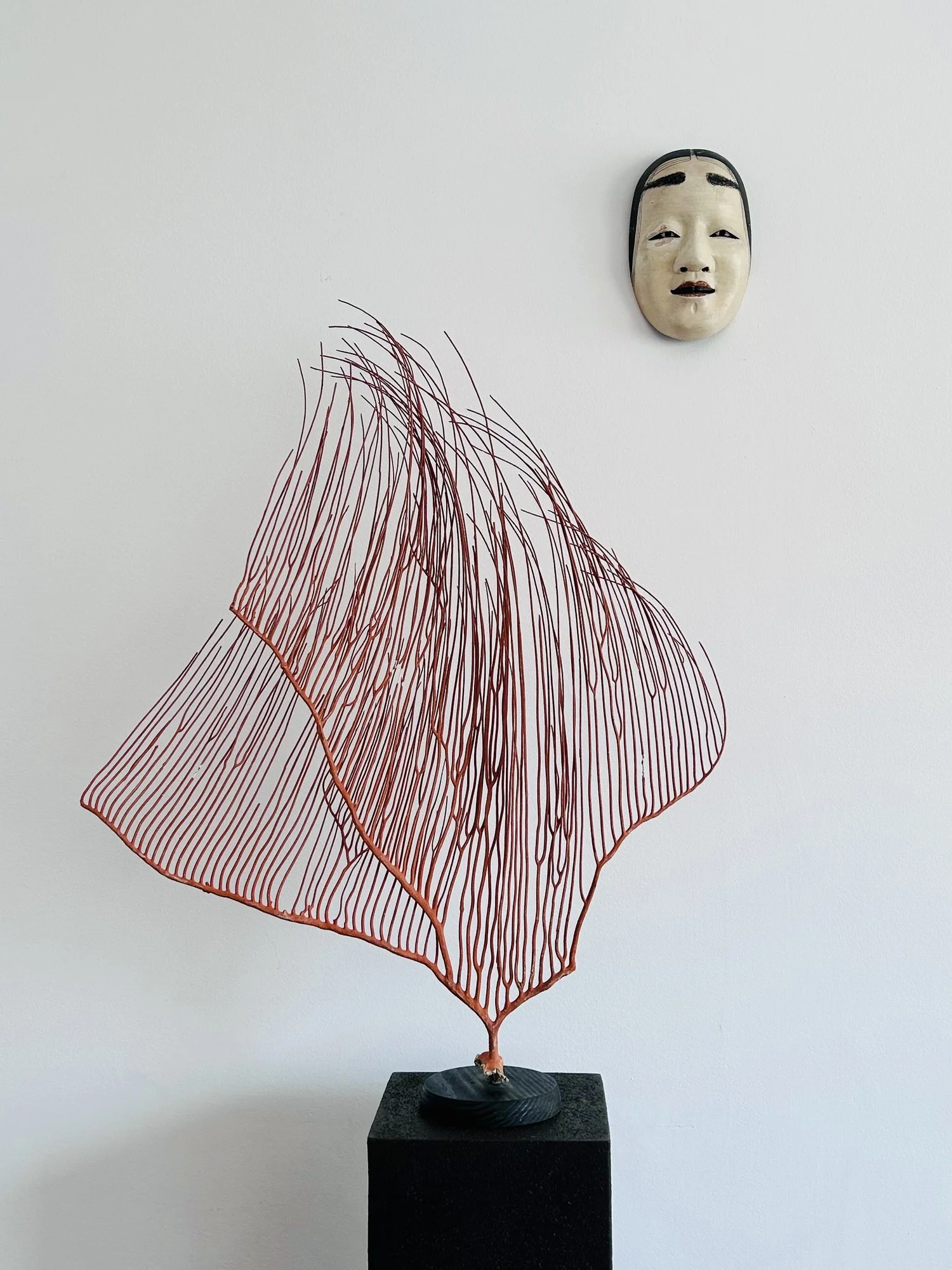 Image 3 of 8
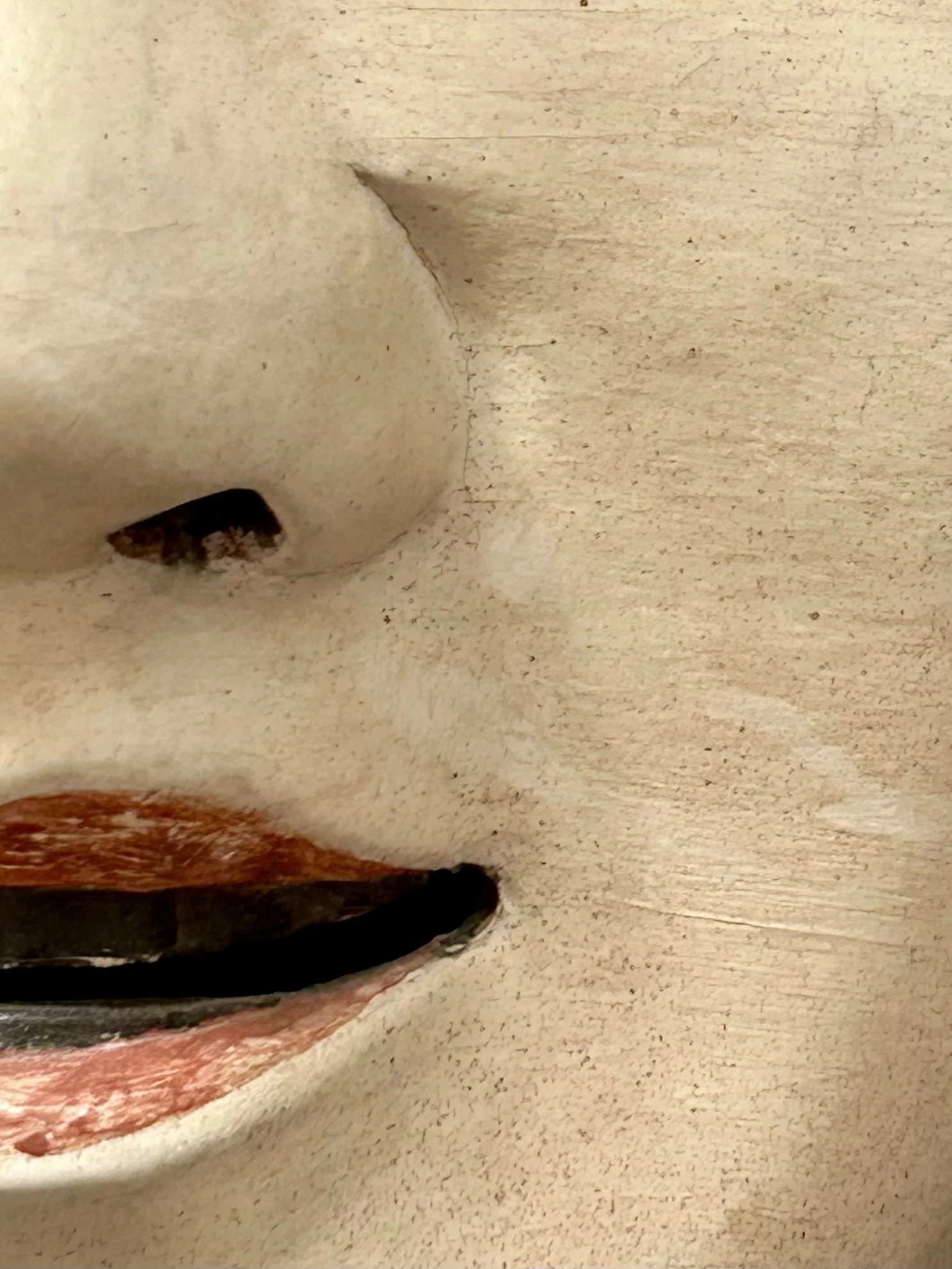 Image 4 of 8
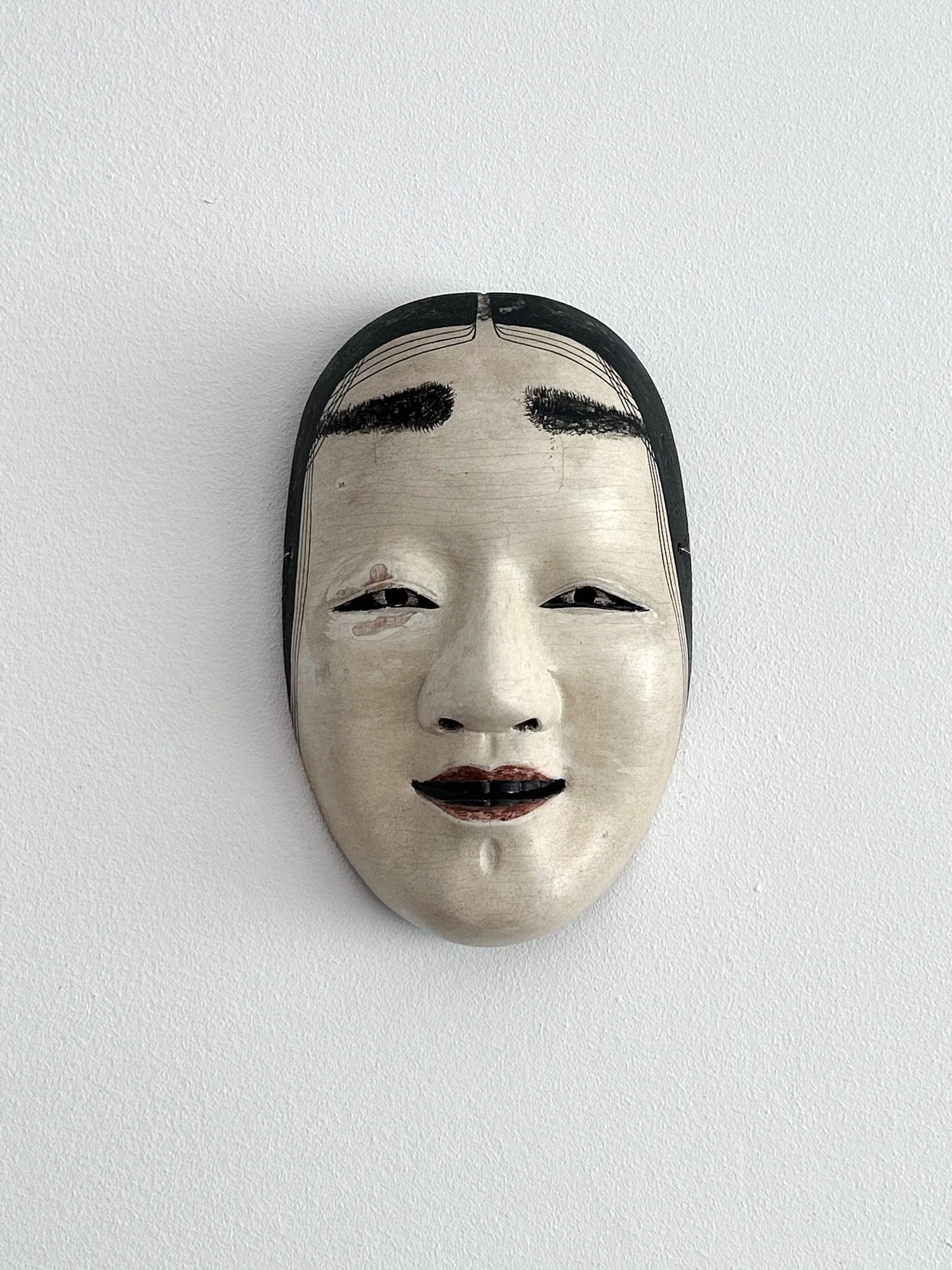 Image 5 of 8
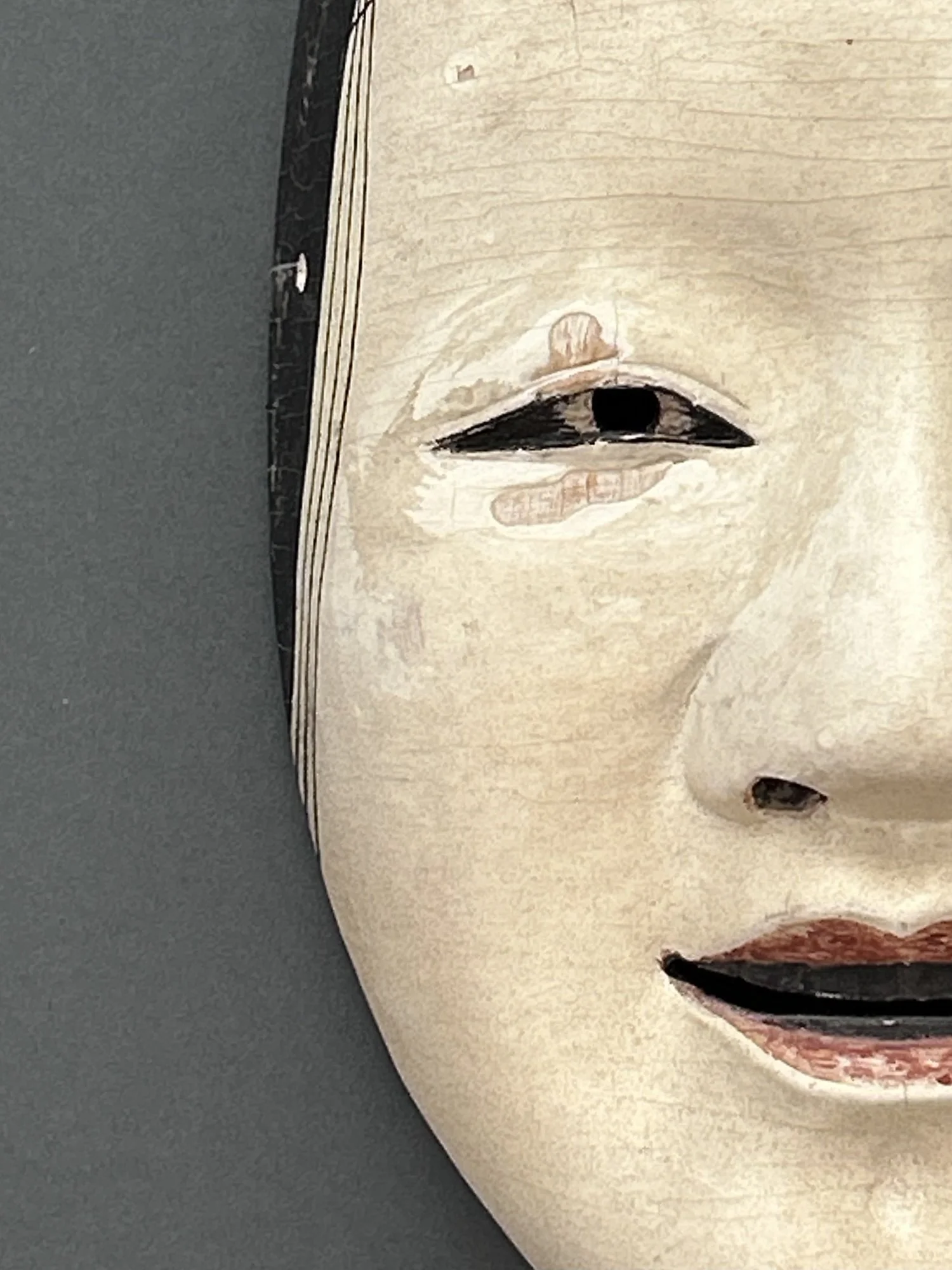 Image 6 of 8
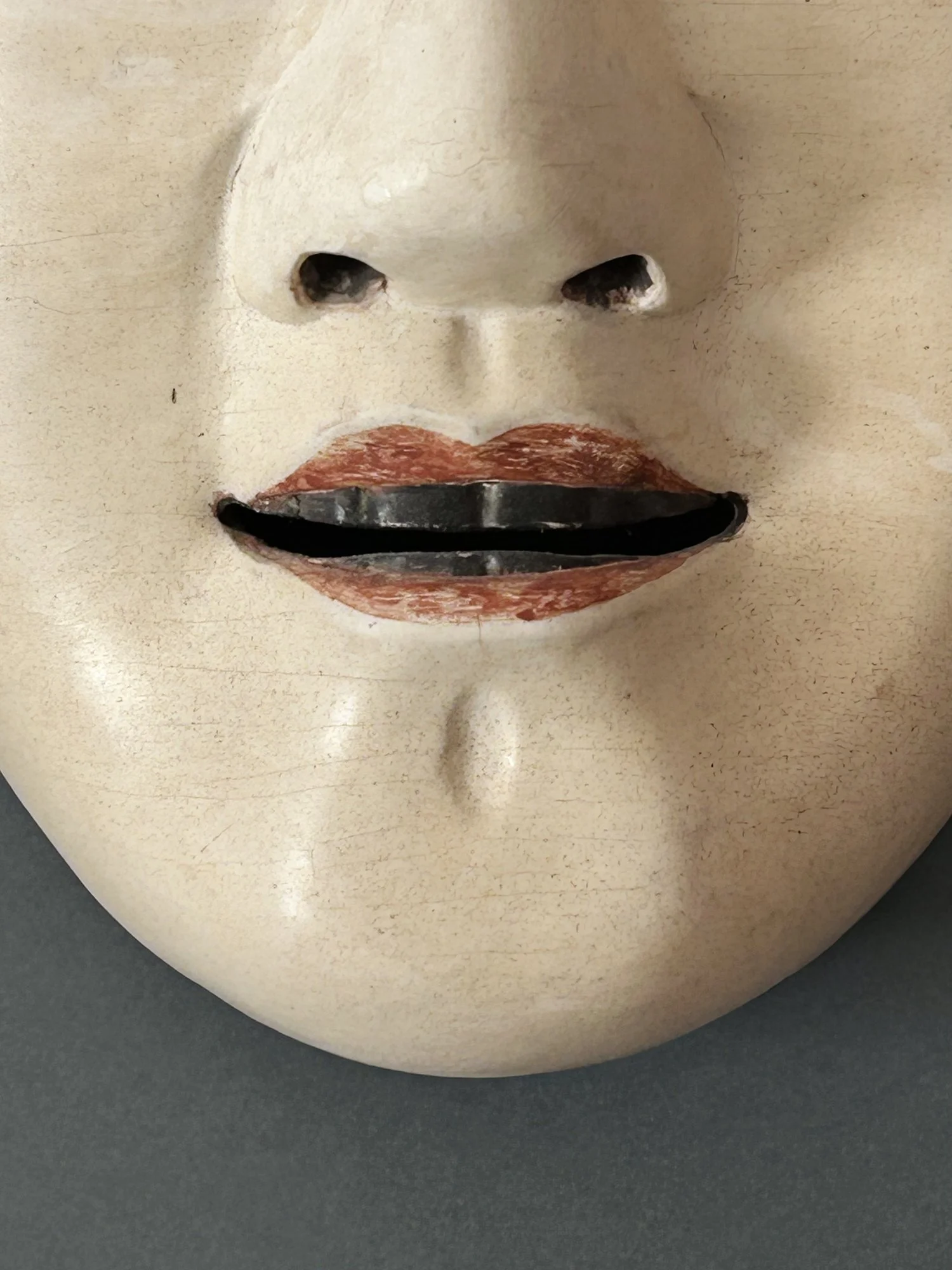 Image 7 of 8
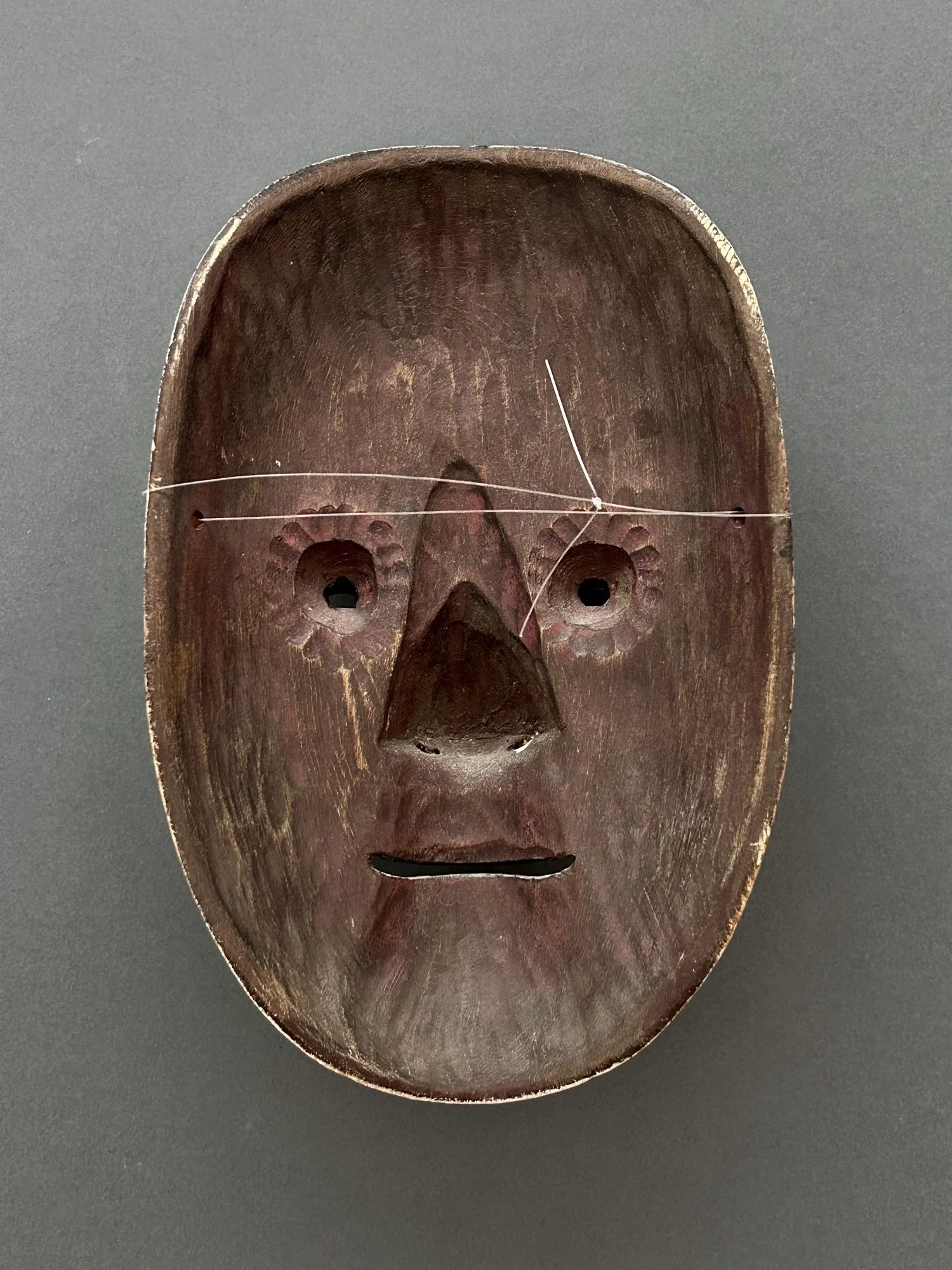 Image 8 of 8