Spain, c. 1900–10
Wood and gilt, 41 × 36 cm
Good condition, with minor surface abrasions due to age.
A carved and gilded wooden frame of pronounced sculptural depth, its openwork foliate carving unfolding through rhythmic scrolls and pierced acanthus leaves. Drawing on Baroque exuberance, but executed in the early twentieth century, the frame feels both historically rooted and unexpectedly restrained.
The carving is confident and deeply modelled, with light moving across raised surfaces and receding into shadowed voids. A disciplined inner moulding provides a measured counterpoint to the outer ornament, ensuring both balance and clarity.
The gilded surface, laid over gesso, has mellowed beautifully with time. Wear to the high points and small losses reveal the underlying layers, enriching the complexity of the surface and reinforcing the material honesty of the piece, rather than diminishing it.
Whether framing a work of art, used as a mirror or standing alone as a sculptural object, the frame possesses a remarkable independence. Richly carved yet carefully ordered, it demonstrates how ornament, when disciplined by proportion and rhythm, can create genuine architectural presence.

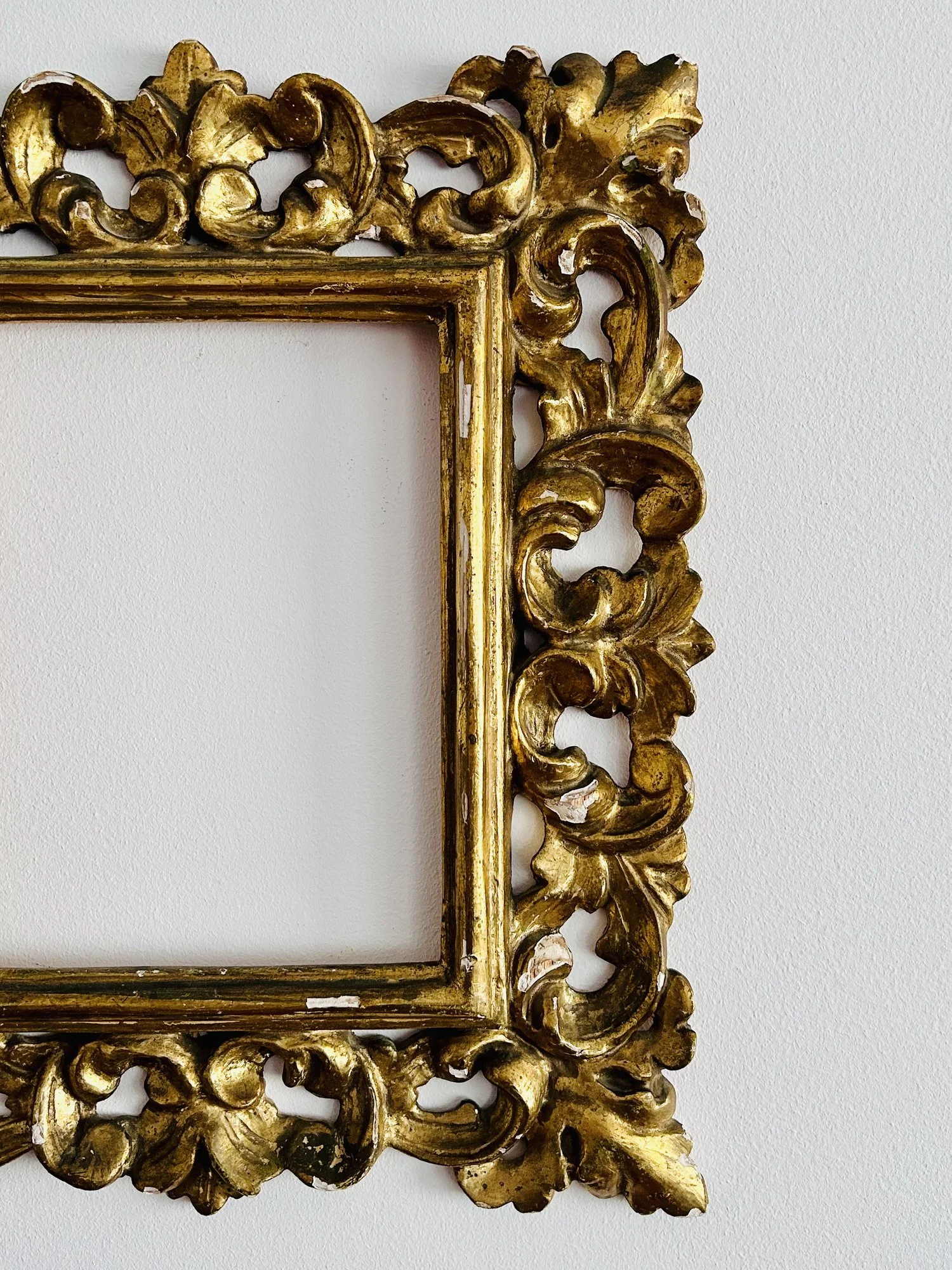 Image 1 of 6
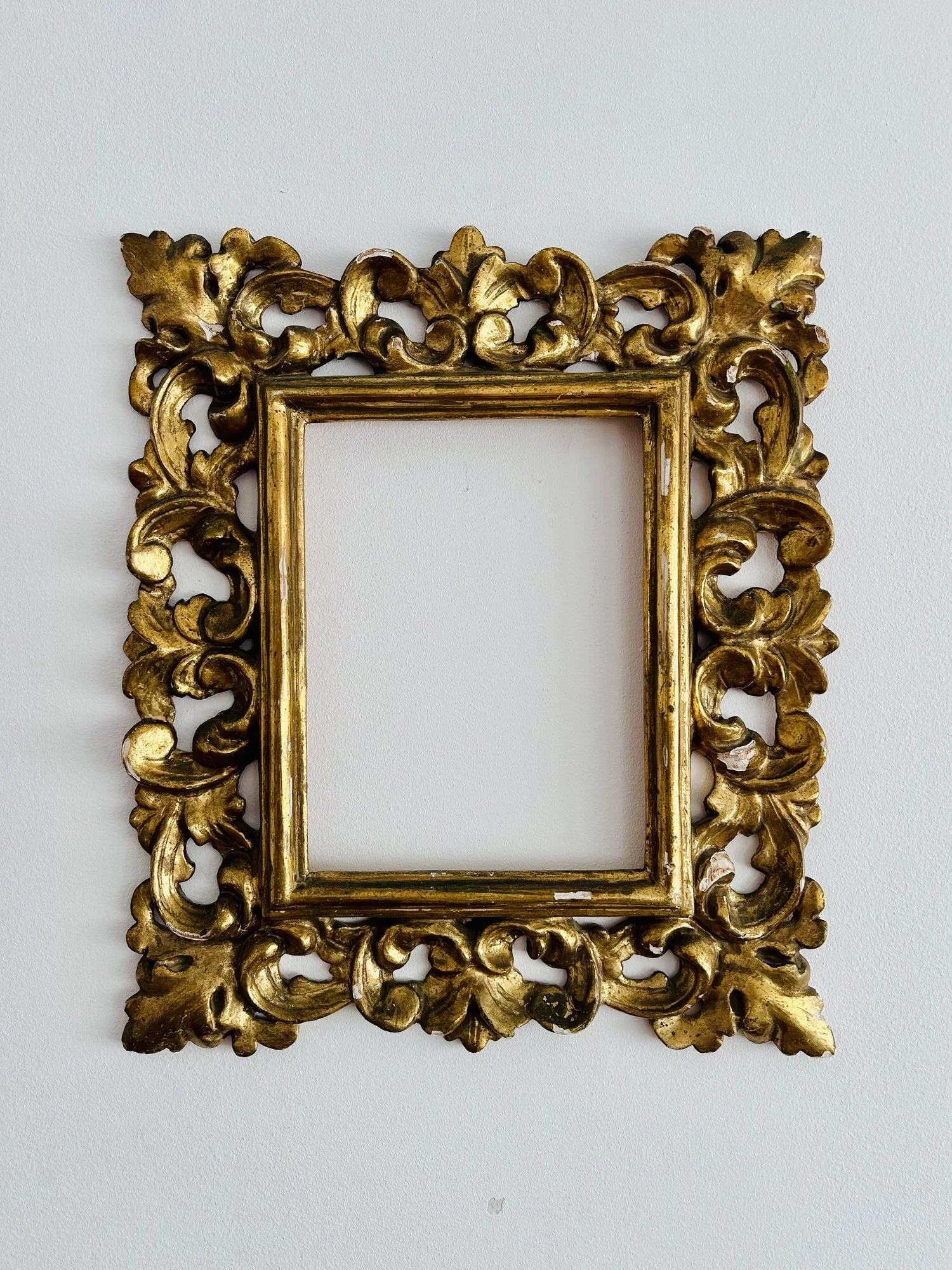 Image 2 of 6
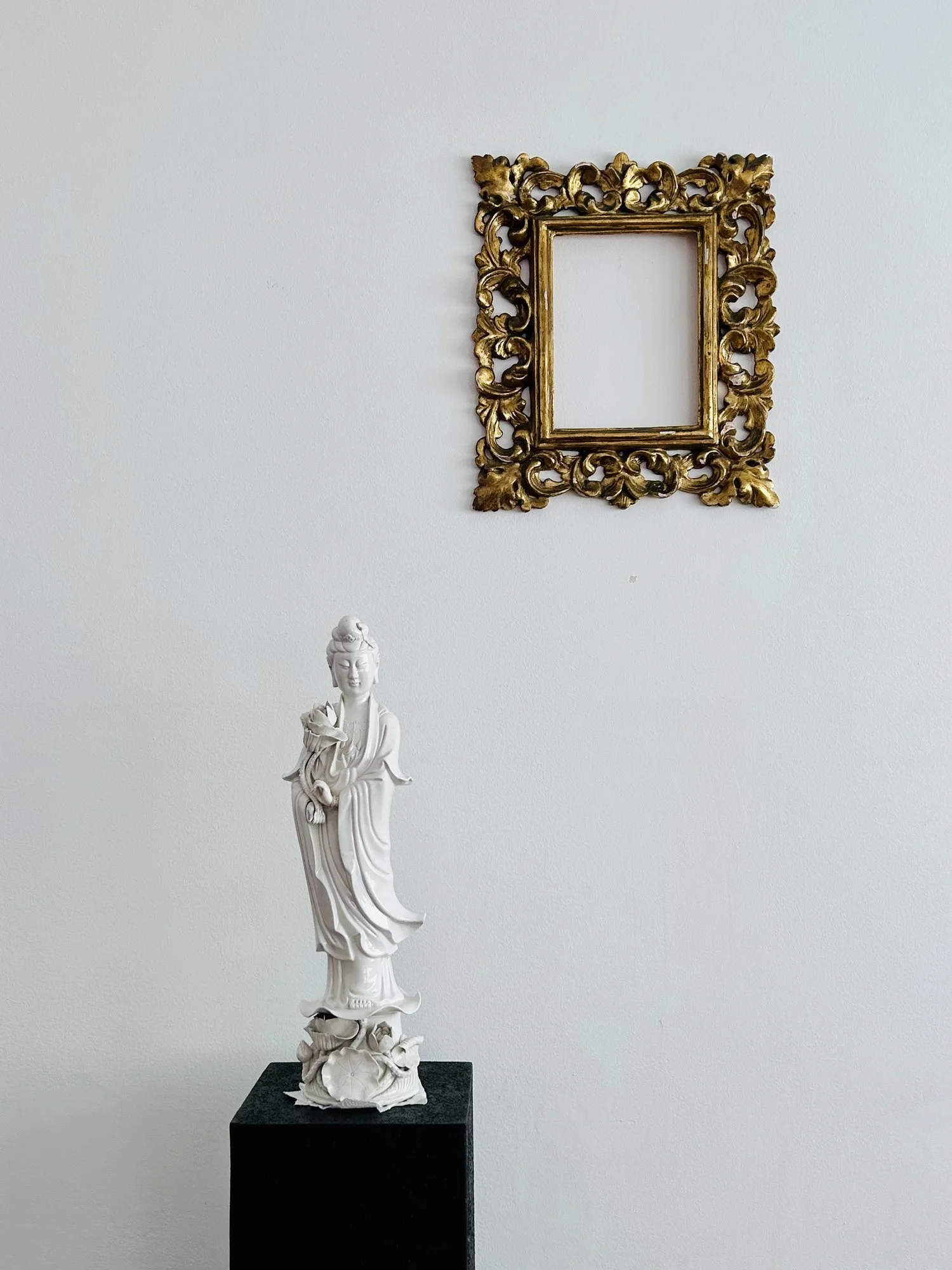 Image 3 of 6
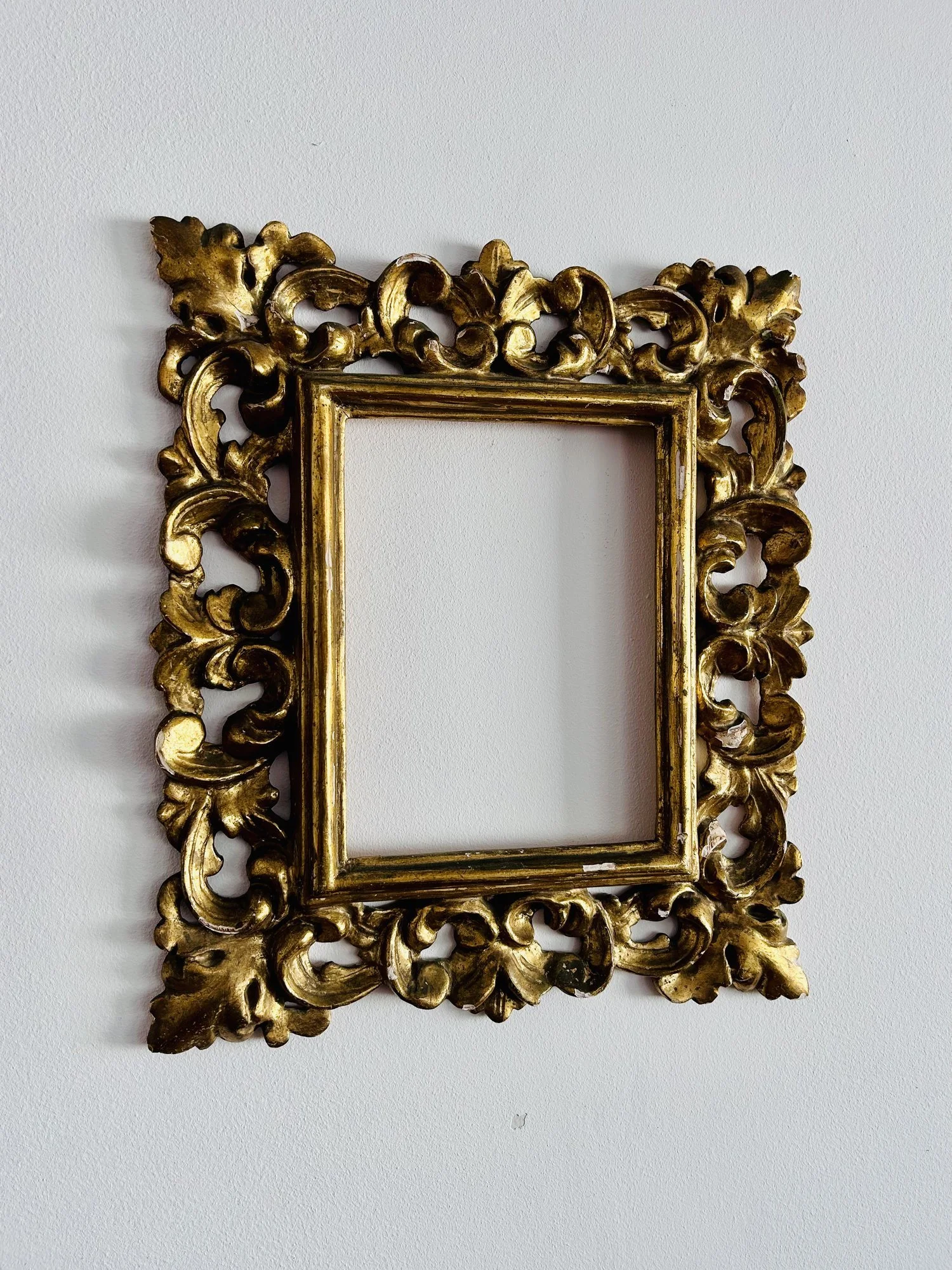 Image 4 of 6
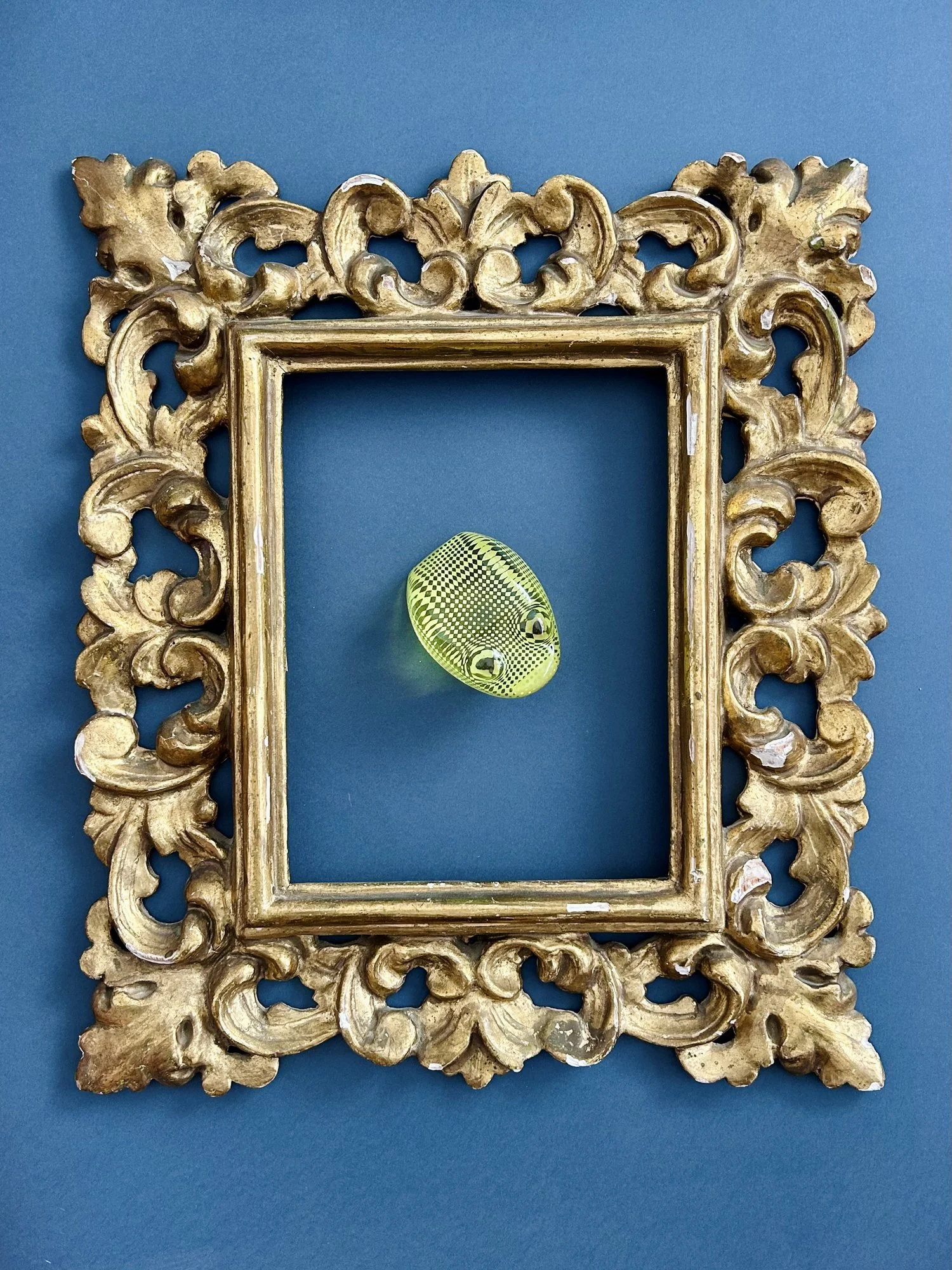 Image 5 of 6
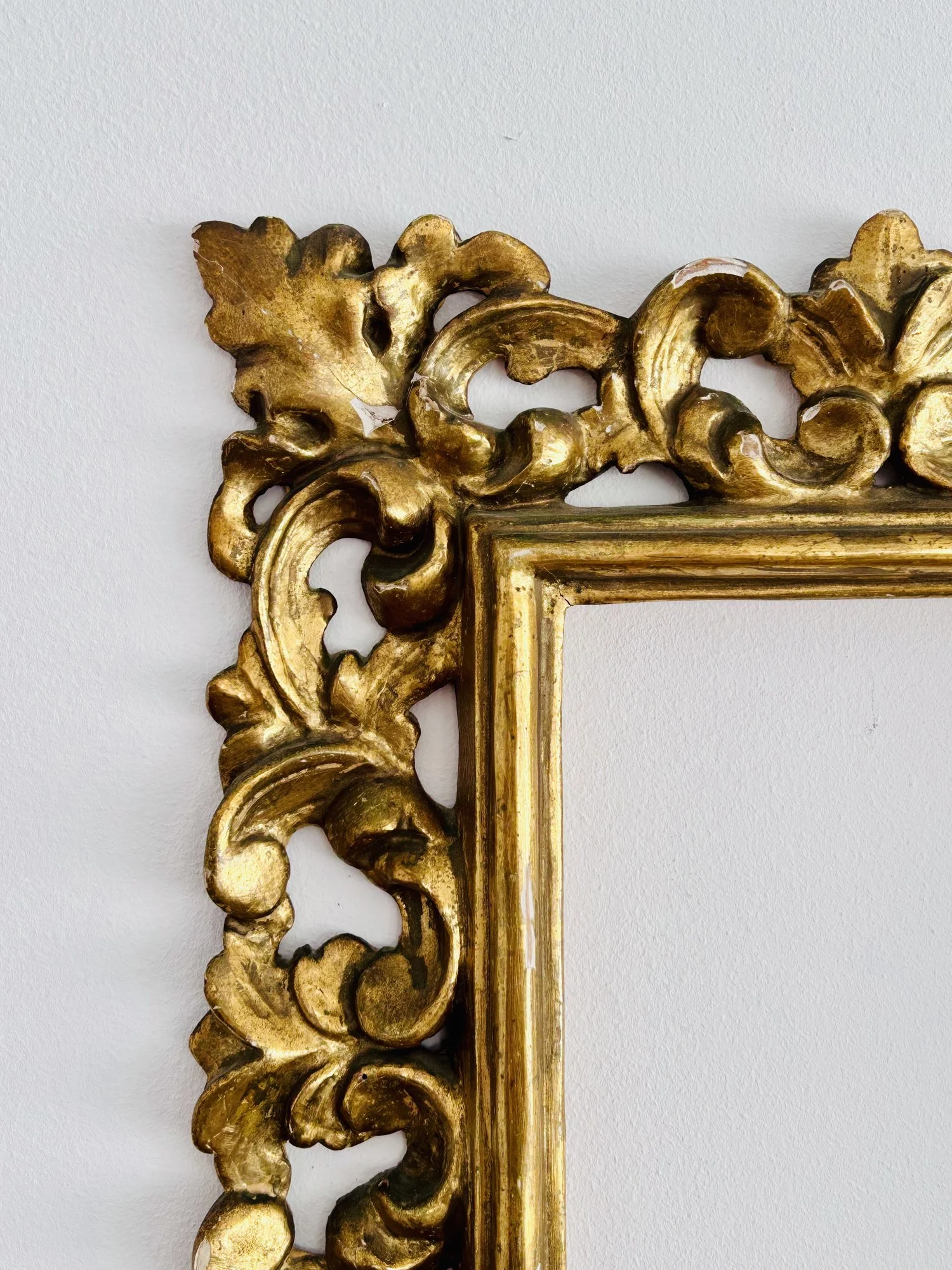 Image 6 of 6