Italy, 1977
Solid walnut with contrasting blonde wood elements; original leather seat; 79 × 56 × 47 cm
Excellent structural and overall condition; original finish retained.
Designed by Afra and Tobia Scarpa in 1975 for Maxalto, the Africa chair is defined by the tension between an architectural walnut frame and the sweeping curvature of its sculptural backrest. Angular in stance yet fluid in profile, structure and ornament become almost indistinguishable.
The backrest provides the defining gesture: a precisely engineered element, split and mirrored to reveal concentric layers of timber. In this unusually graphic example, blonde elements contrast distinctly with the darker walnut, accentuating the geometry of the construction and giving the chair a striking visual clarity.
A production stamp beneath the seat, dated 17.6.77, precisely dates its manufacture to June 1977, placing the chair firmly within the early production of the model. The original finish and time-softened patina remain intact, while the leather seat has deliberately been preserved in its existing state.
Almost fifty years after its manufacture, the chair feels remarkably uncompromised: material, structure and proportion carry the design, with the construction itself becoming its most expressive feature.

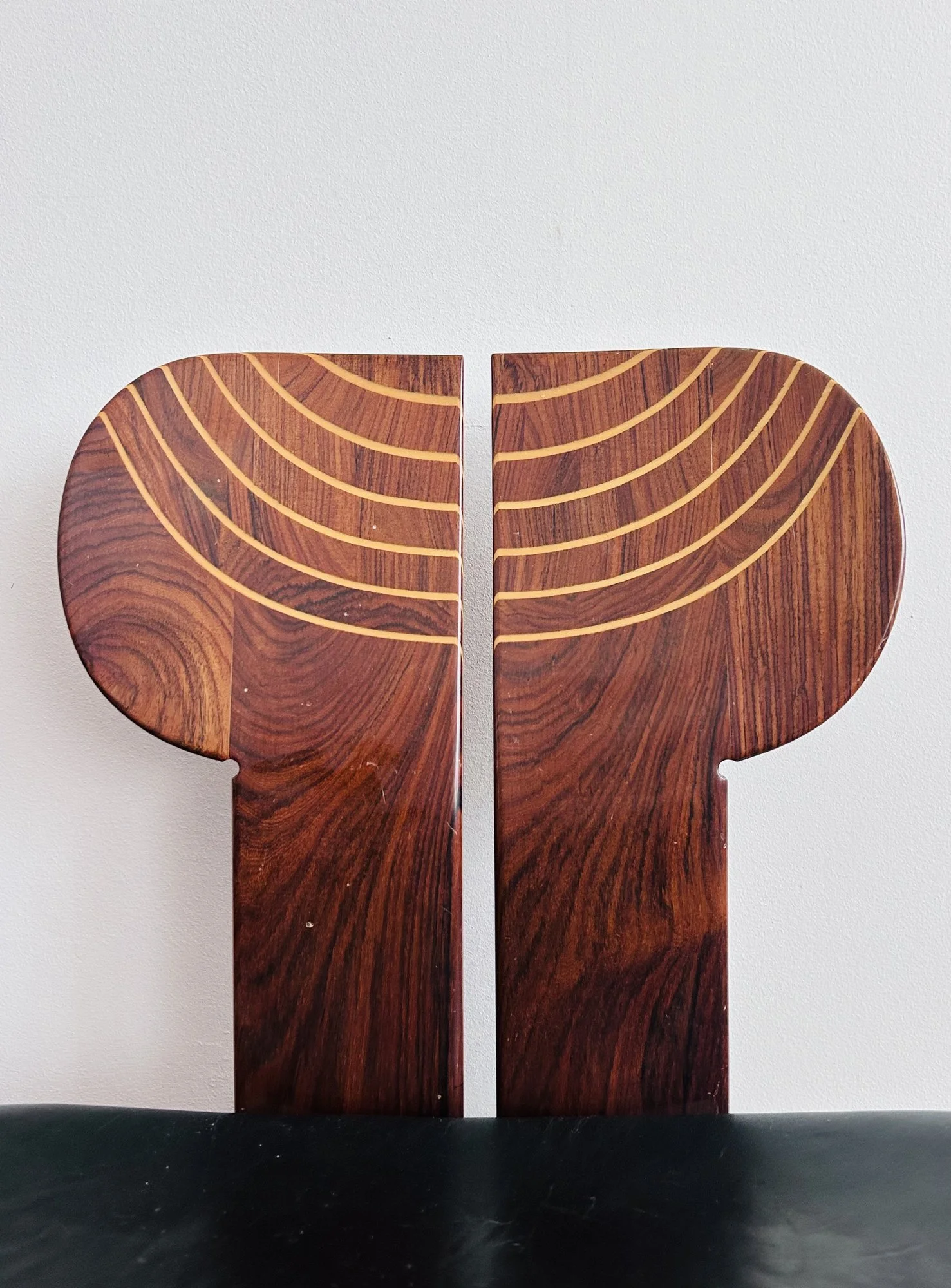 Image 1 of 12
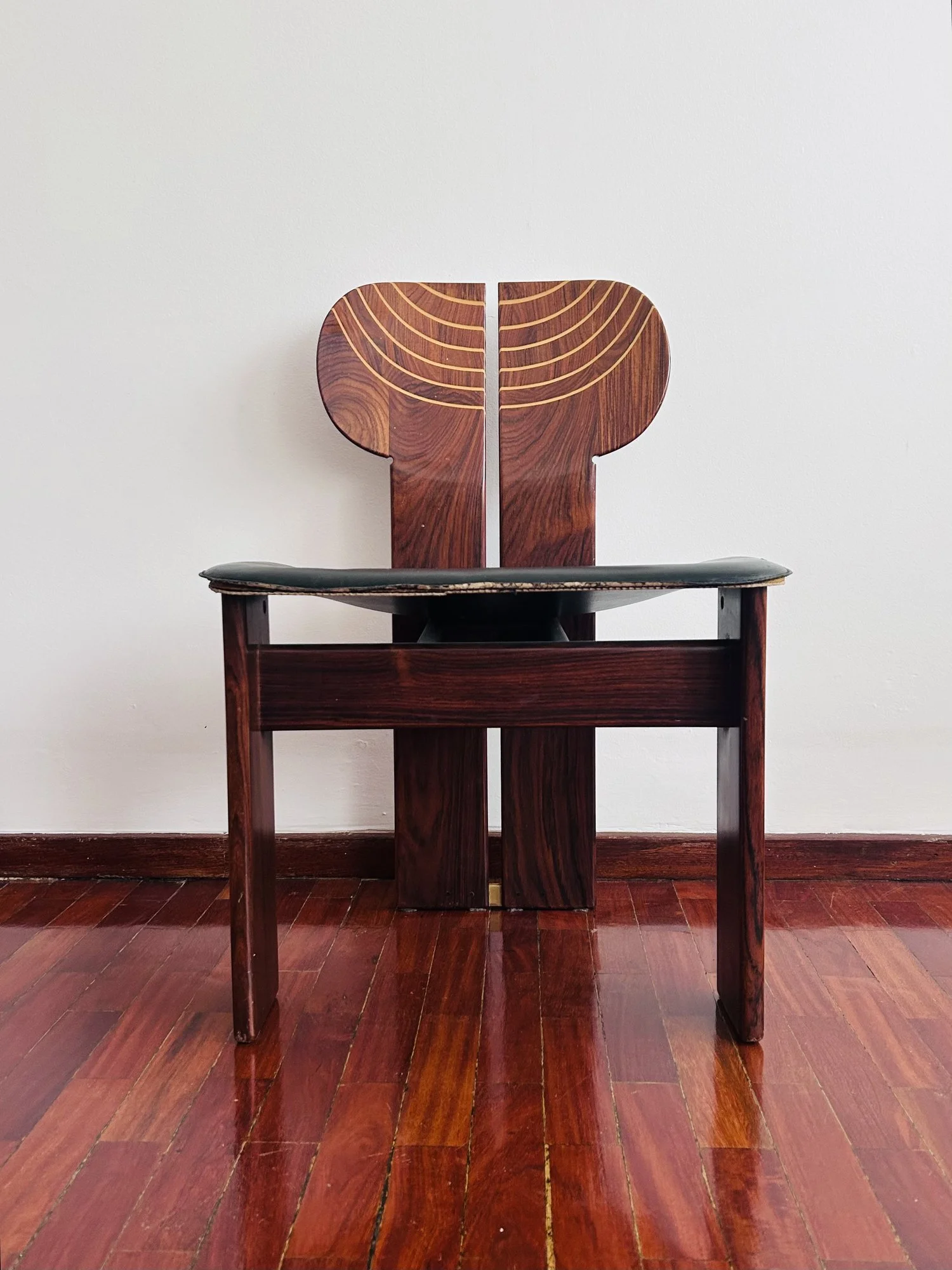 Image 2 of 12
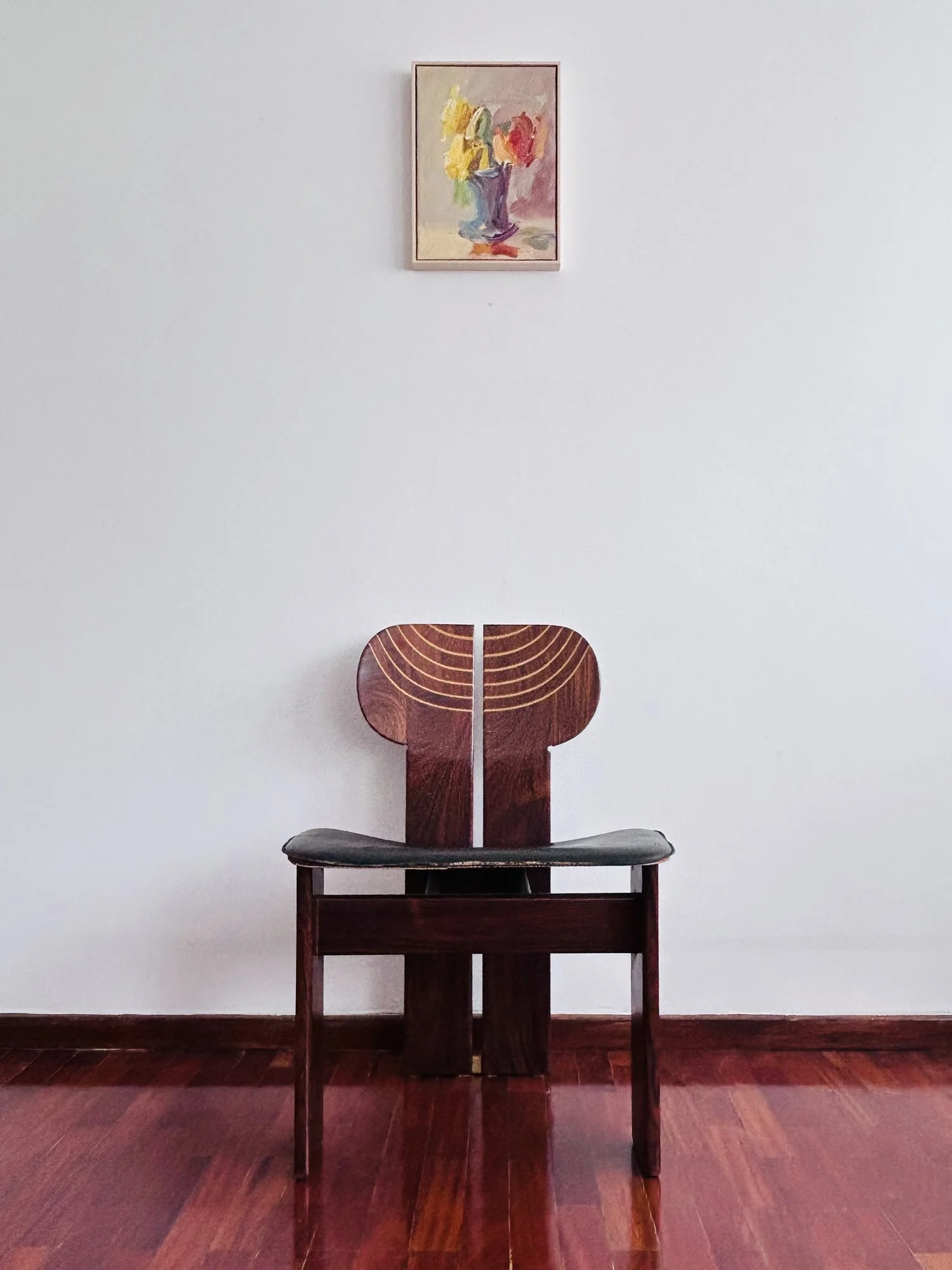 Image 3 of 12
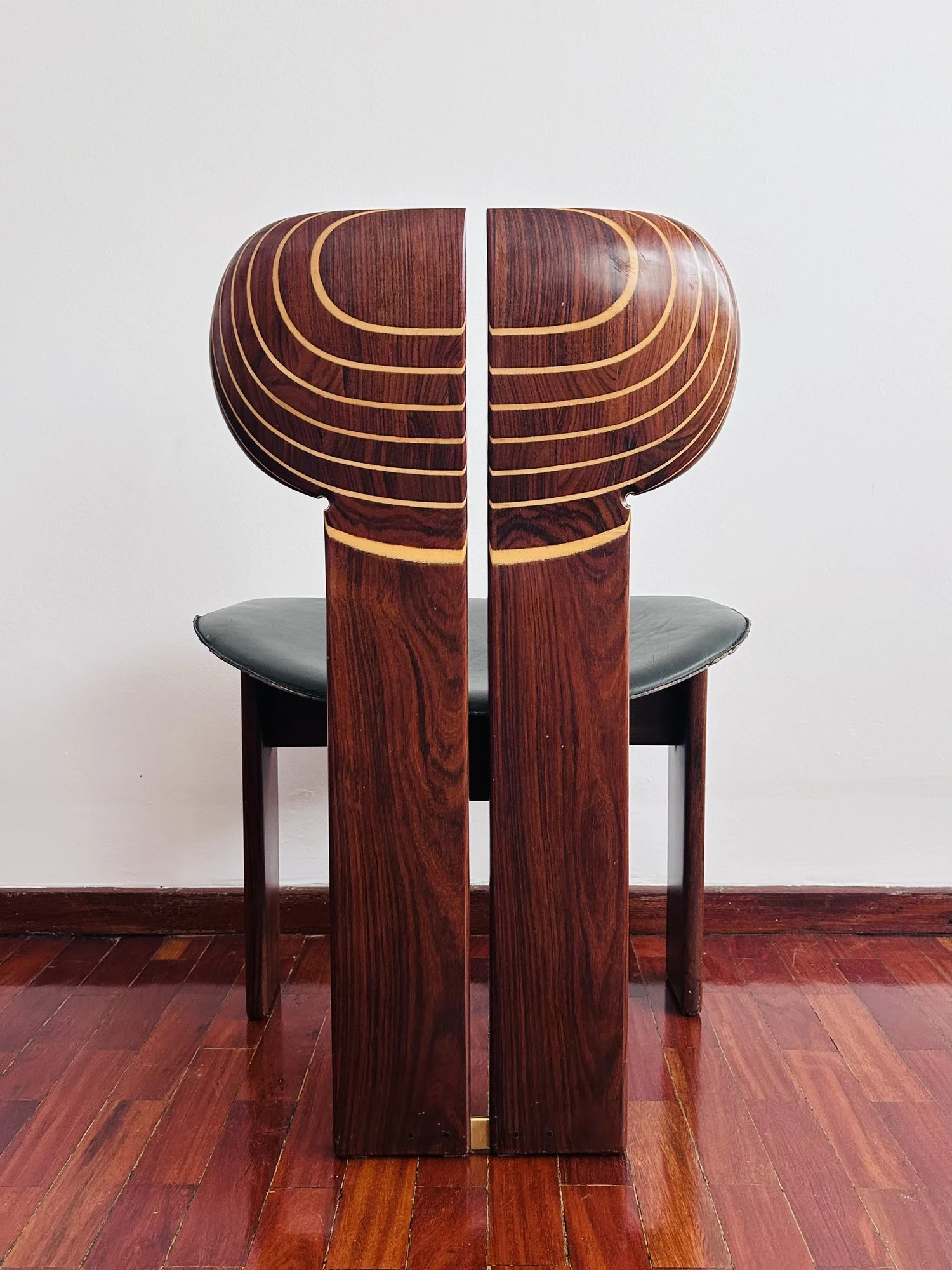 Image 4 of 12
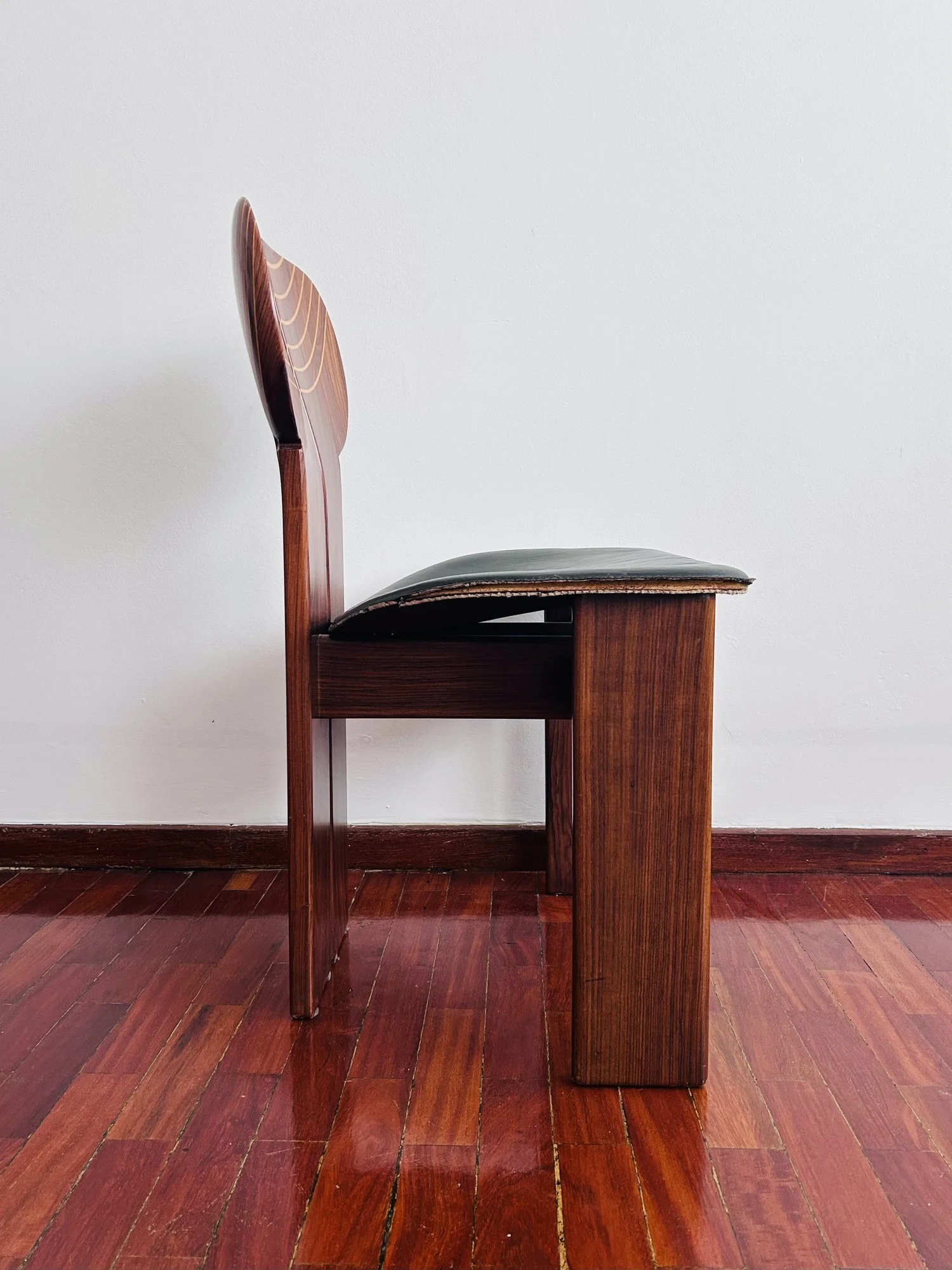 Image 5 of 12
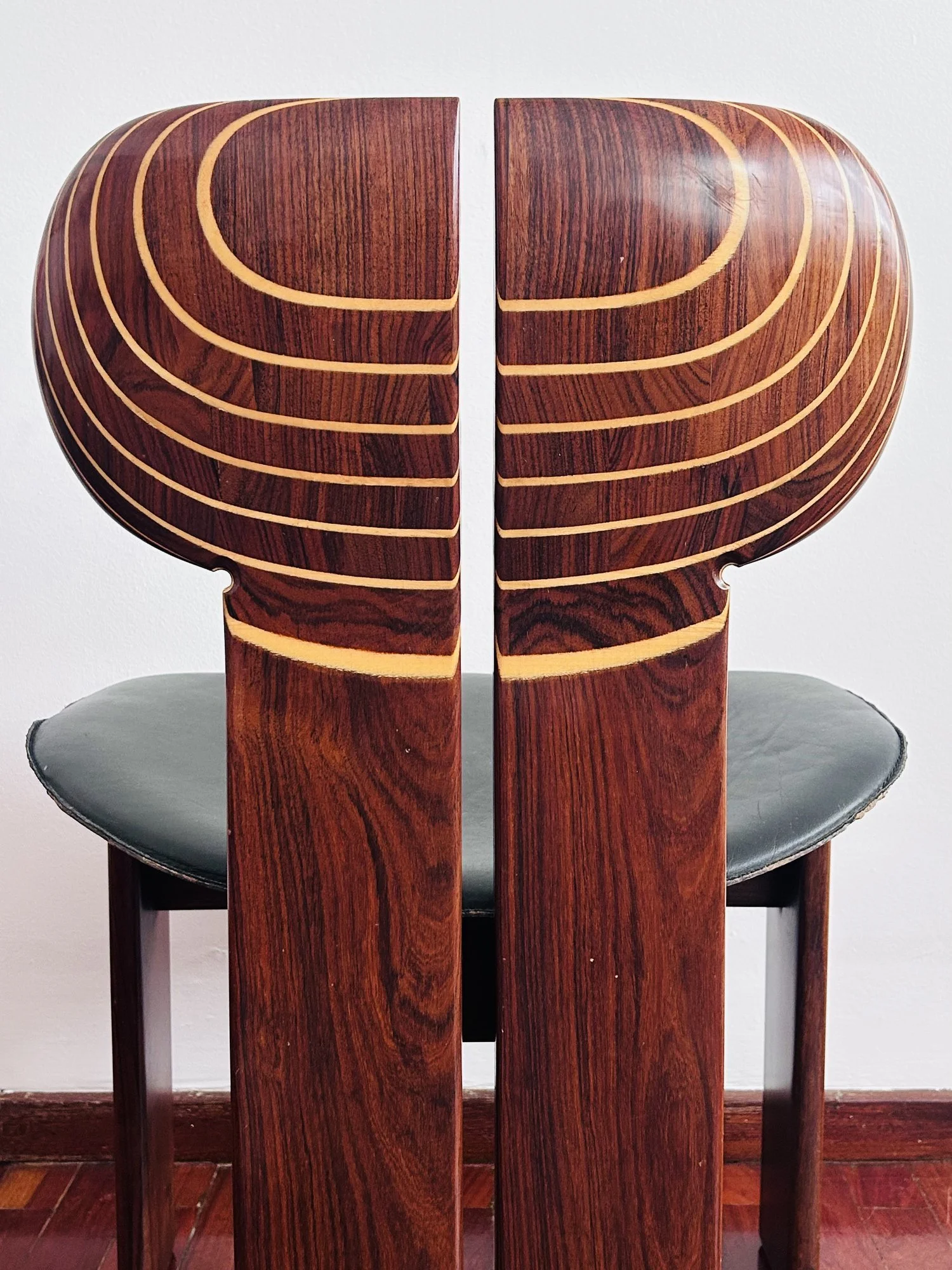 Image 6 of 12
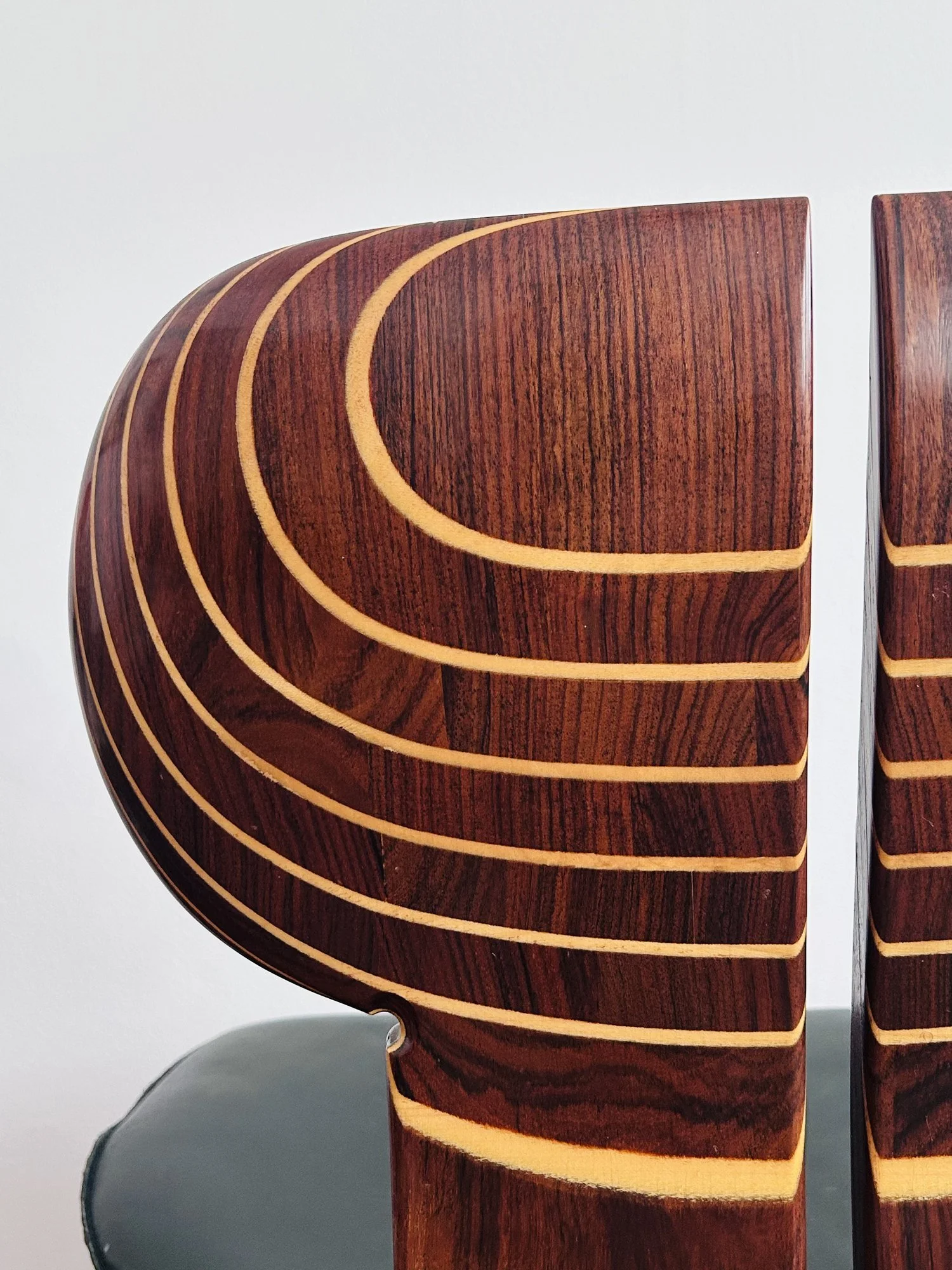 Image 7 of 12
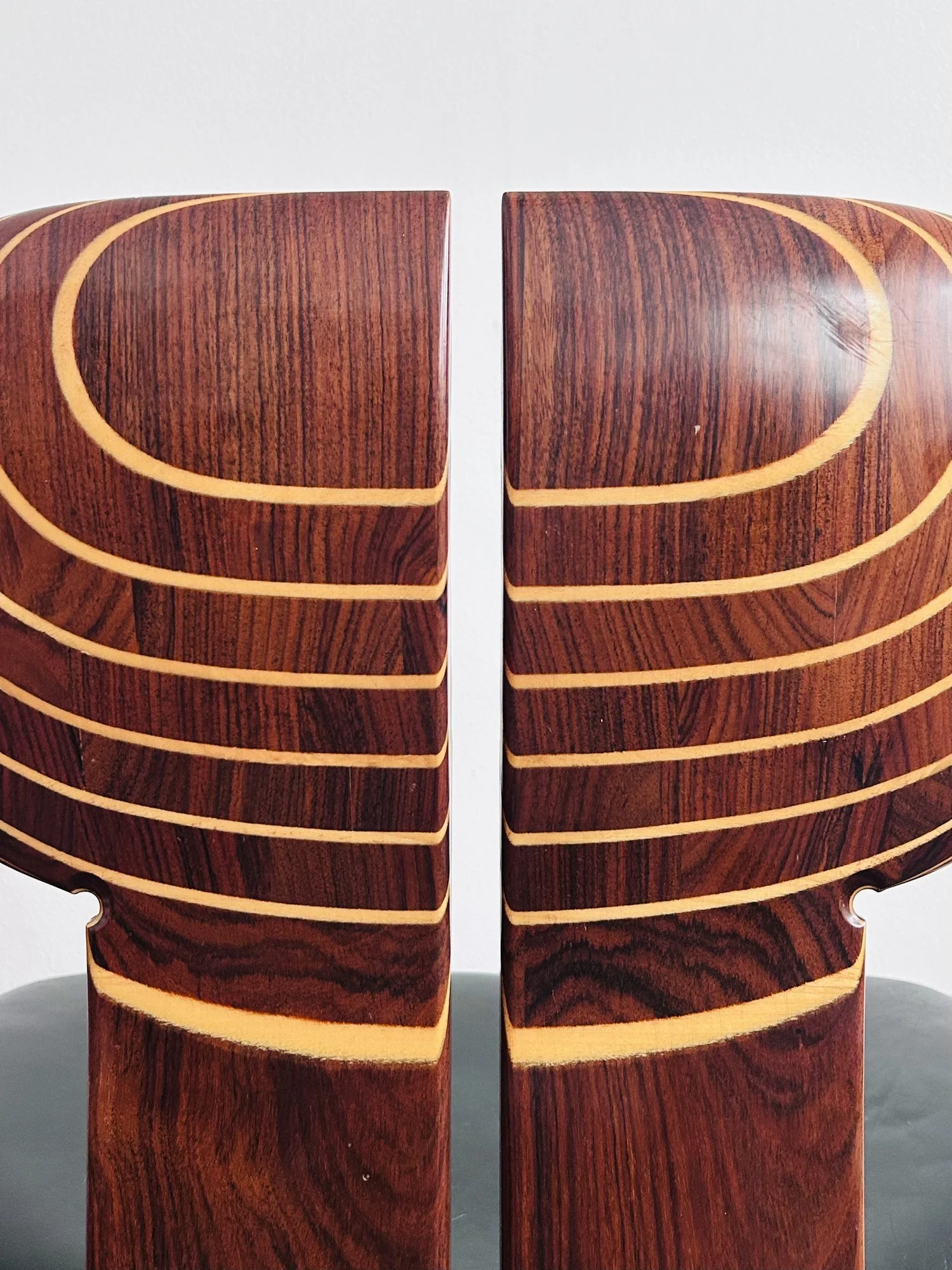 Image 8 of 12
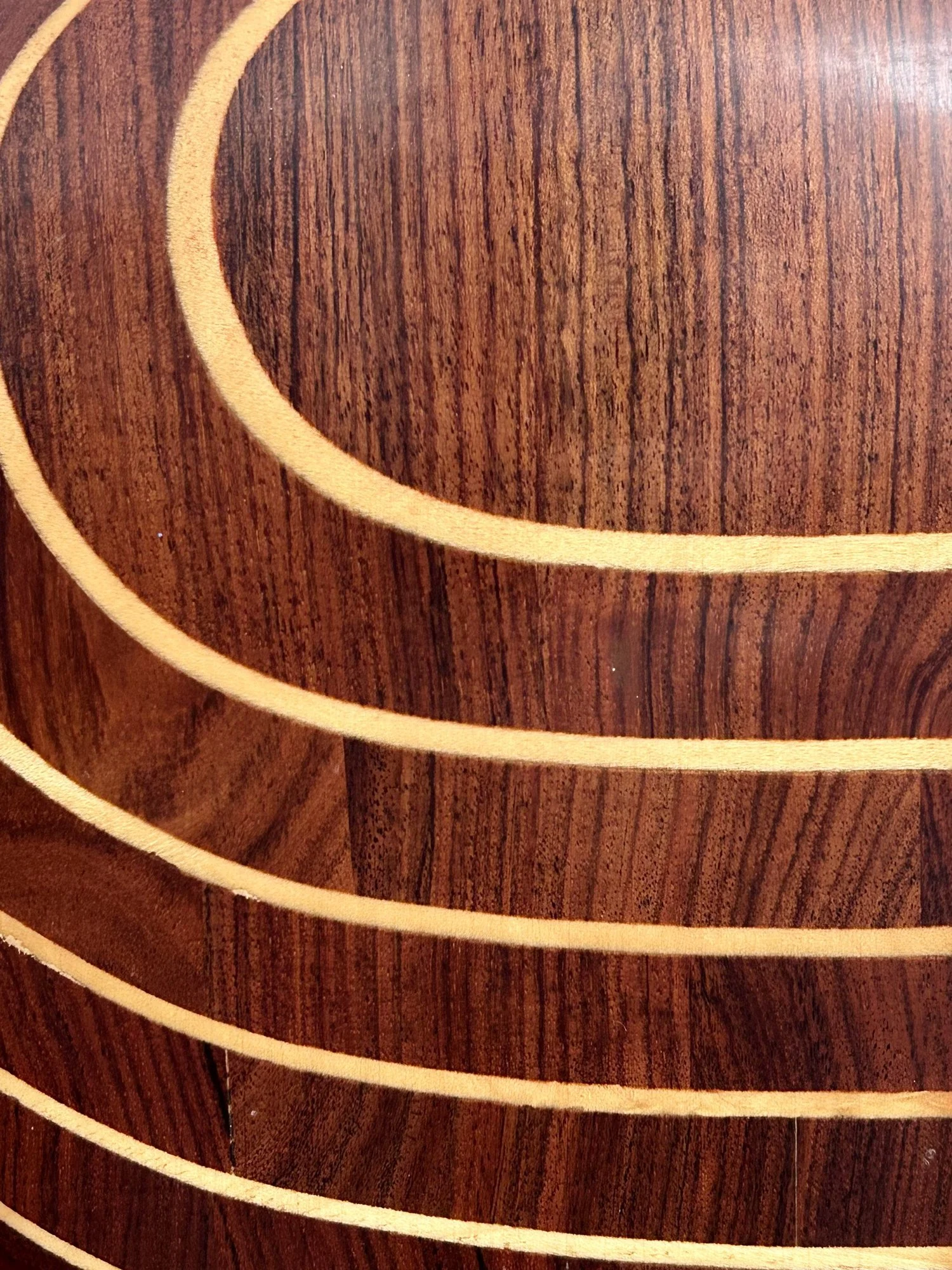 Image 9 of 12
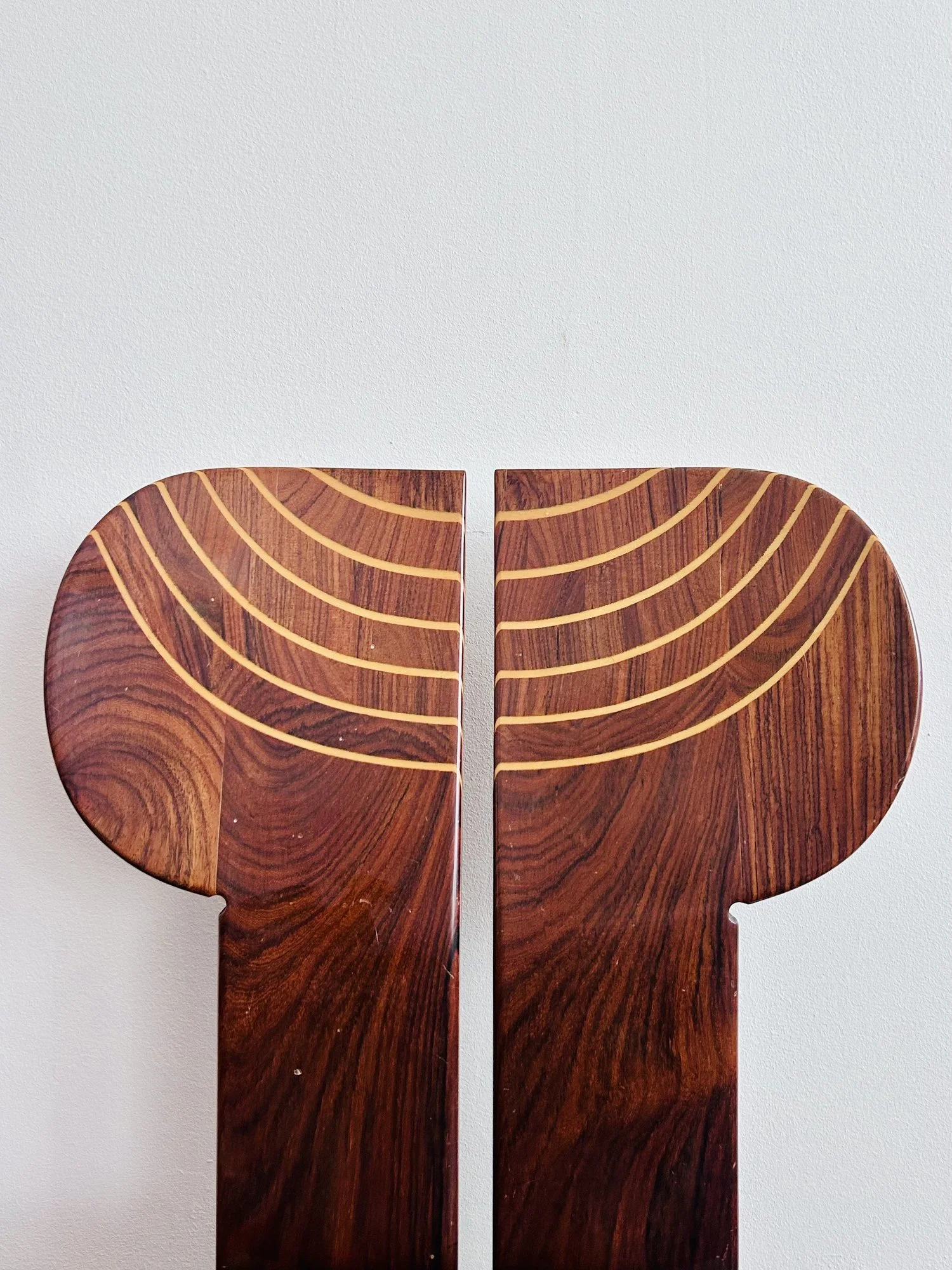 Image 10 of 12
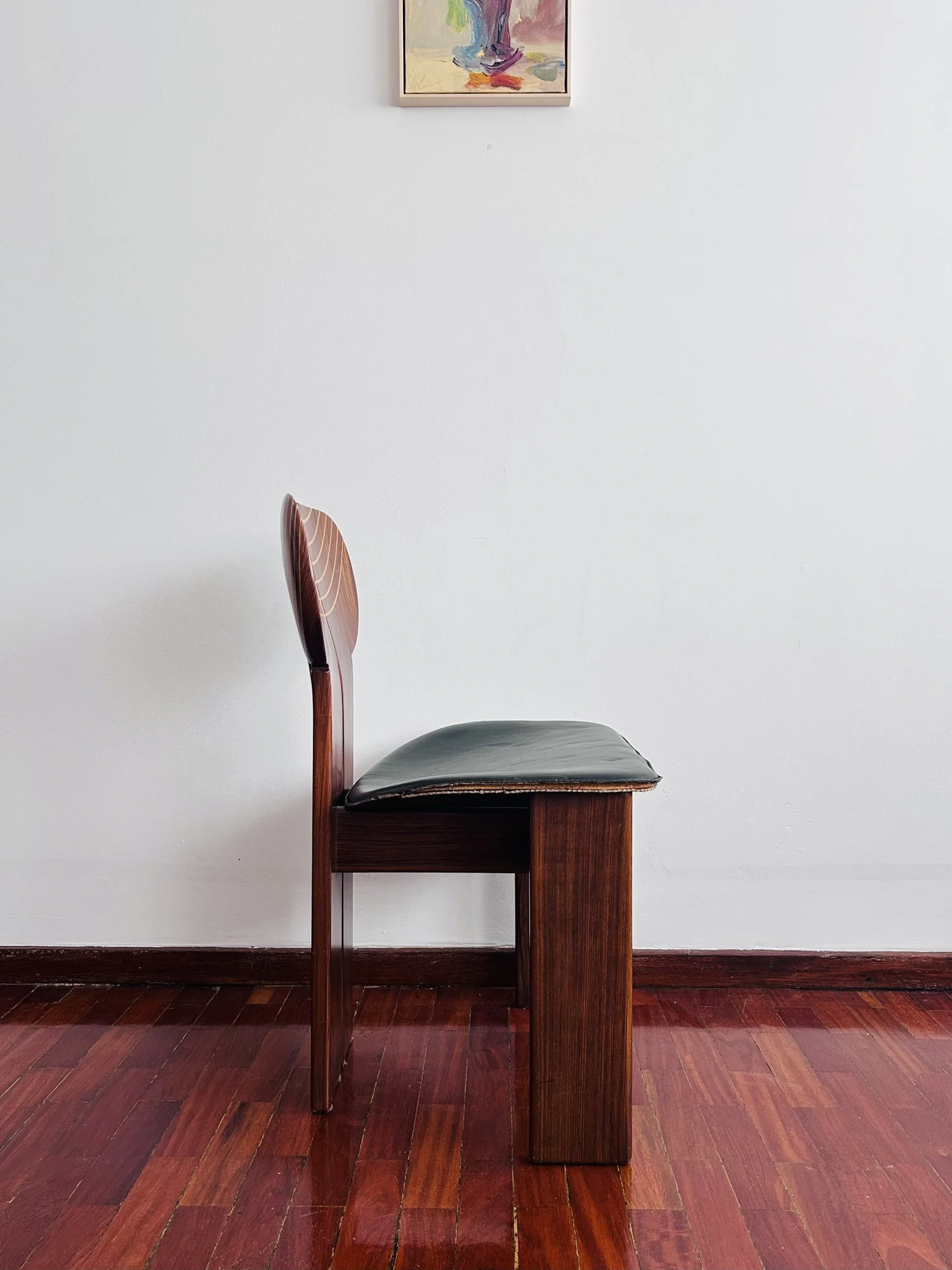 Image 11 of 12
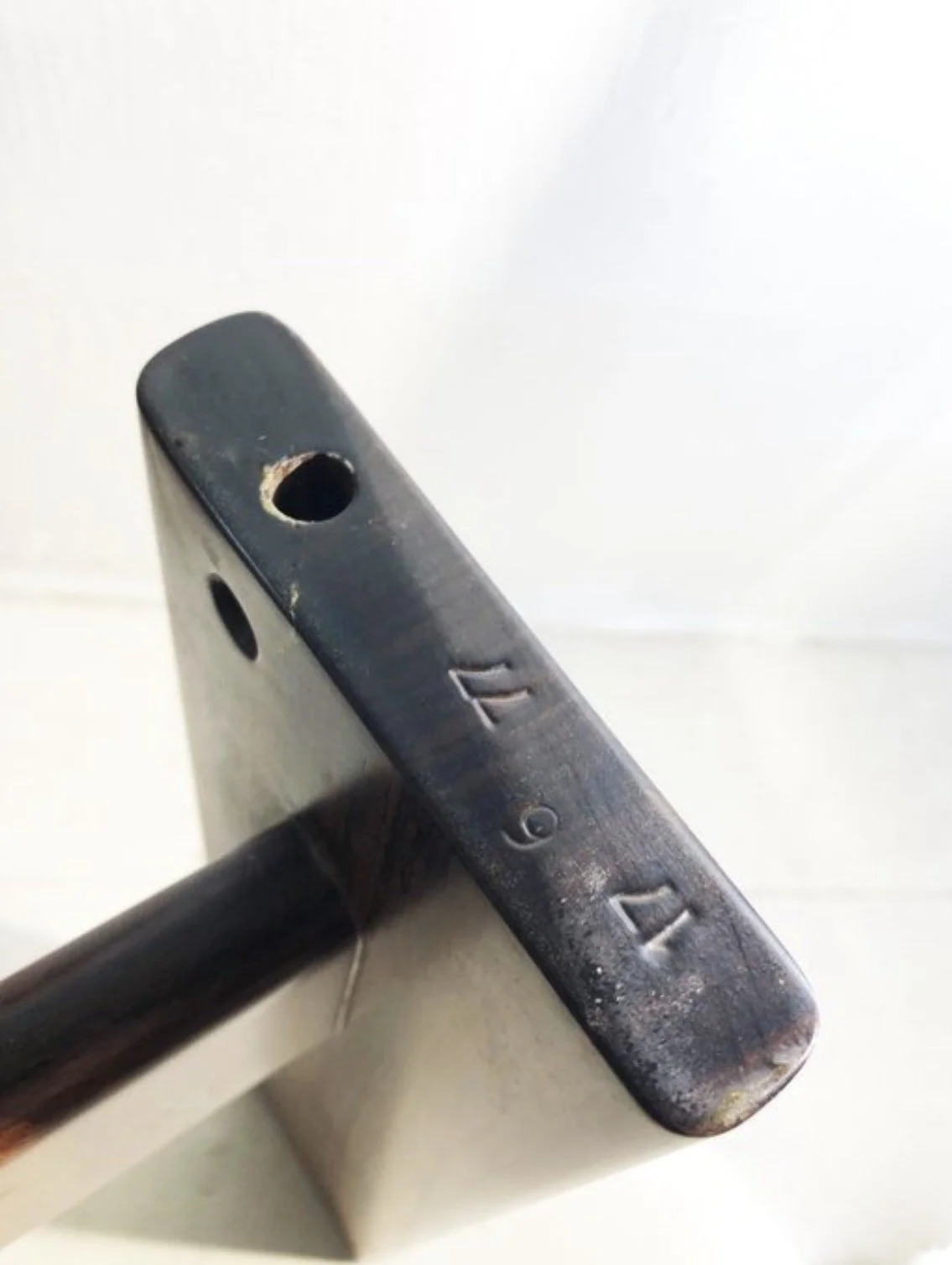 Image 12 of 12