Netherlands, 1966
Oil on board, 73 x 59 x 4 cm
Excellent condition, in original frame.
Painted in 1966, this abstract landscape by Dutch artist Dirk ten Hoedt is defined by its material richness and restrained palette. Built through layers of heavily worked paint, the composition evokes an elemental landscape without describing one directly, allowing texture, rhythm and tonal variation to carry the image.
Broad horizontal passages anchor the work, while expressive brushwork and areas of dense impasto create both solidity and movement. Earth browns, chalk whites and muted greys are punctuated by passages of blue-green, lending depth without disturbing the painting's quiet, but brooding, restraint.
Presented in its original frame, whose tone complements the palette, the work possesses a distinctly architectural presence. It sits comfortably alongside both modernist furniture and contemporary interiors, where its tactile surface and measured composition reward close observation.
A thoughtful example of post-war European abstraction, the painting derives its strength from the disciplined relationship between material, texture and composition.

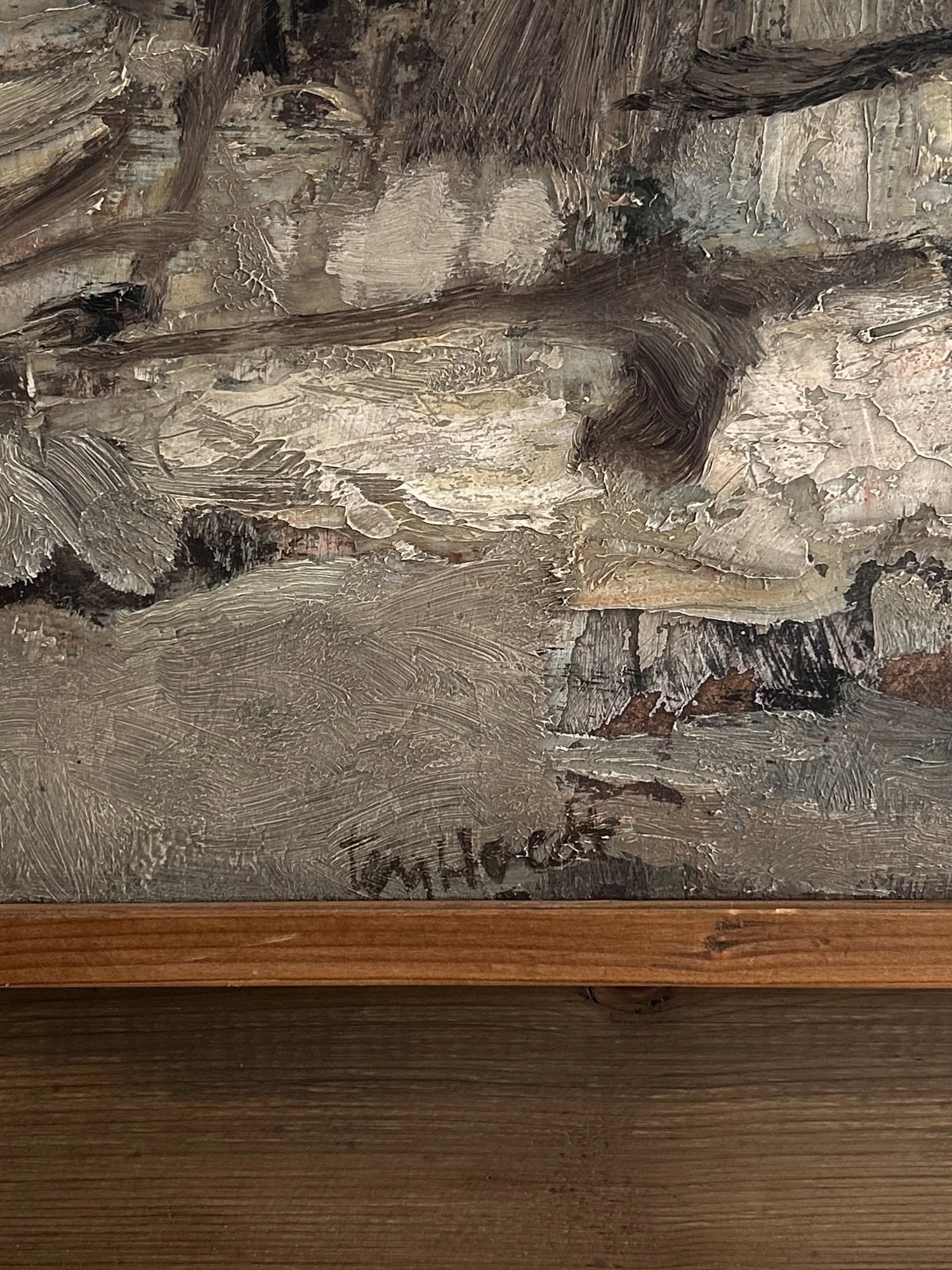 Image 1 of 8
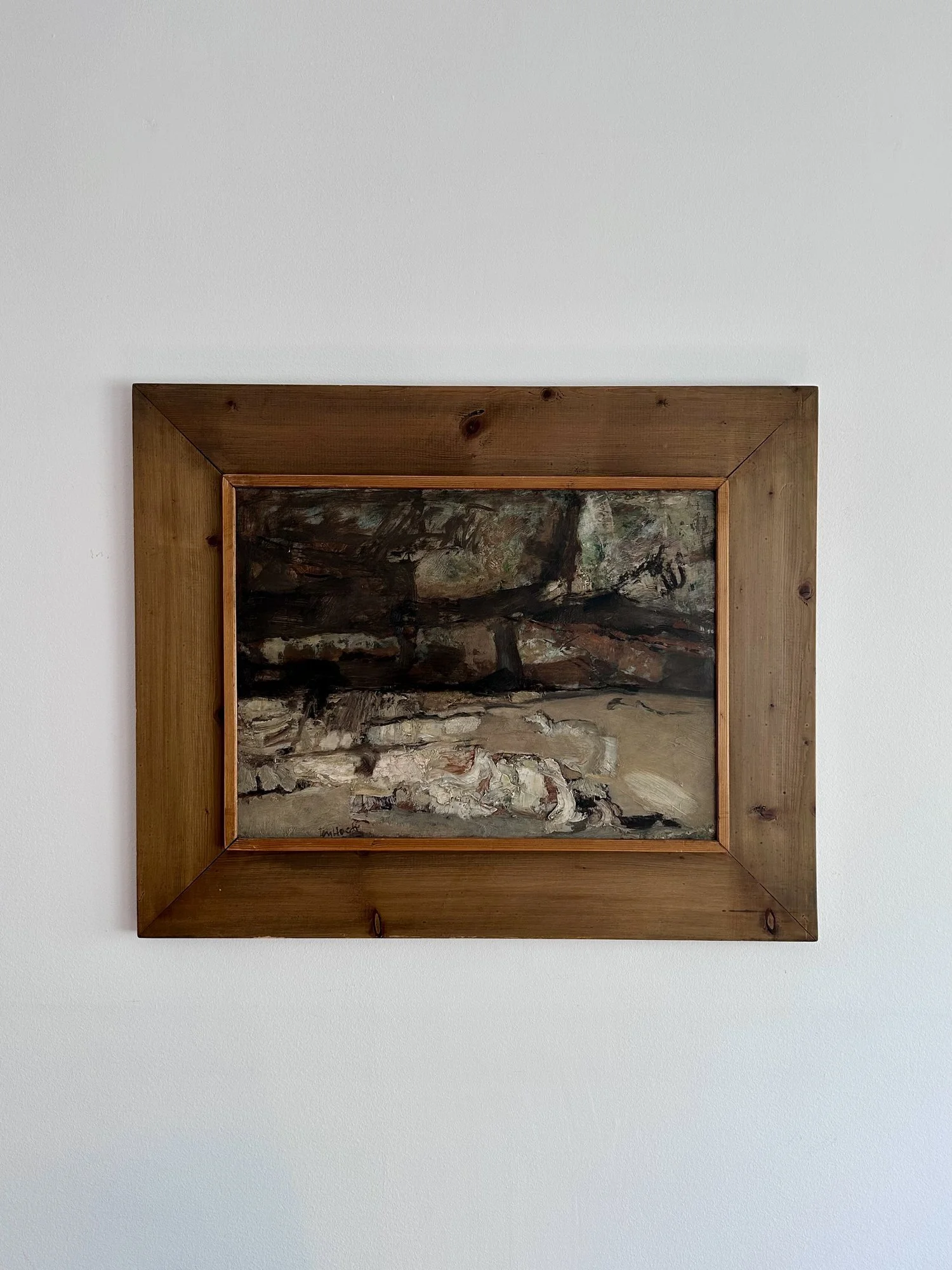 Image 2 of 8
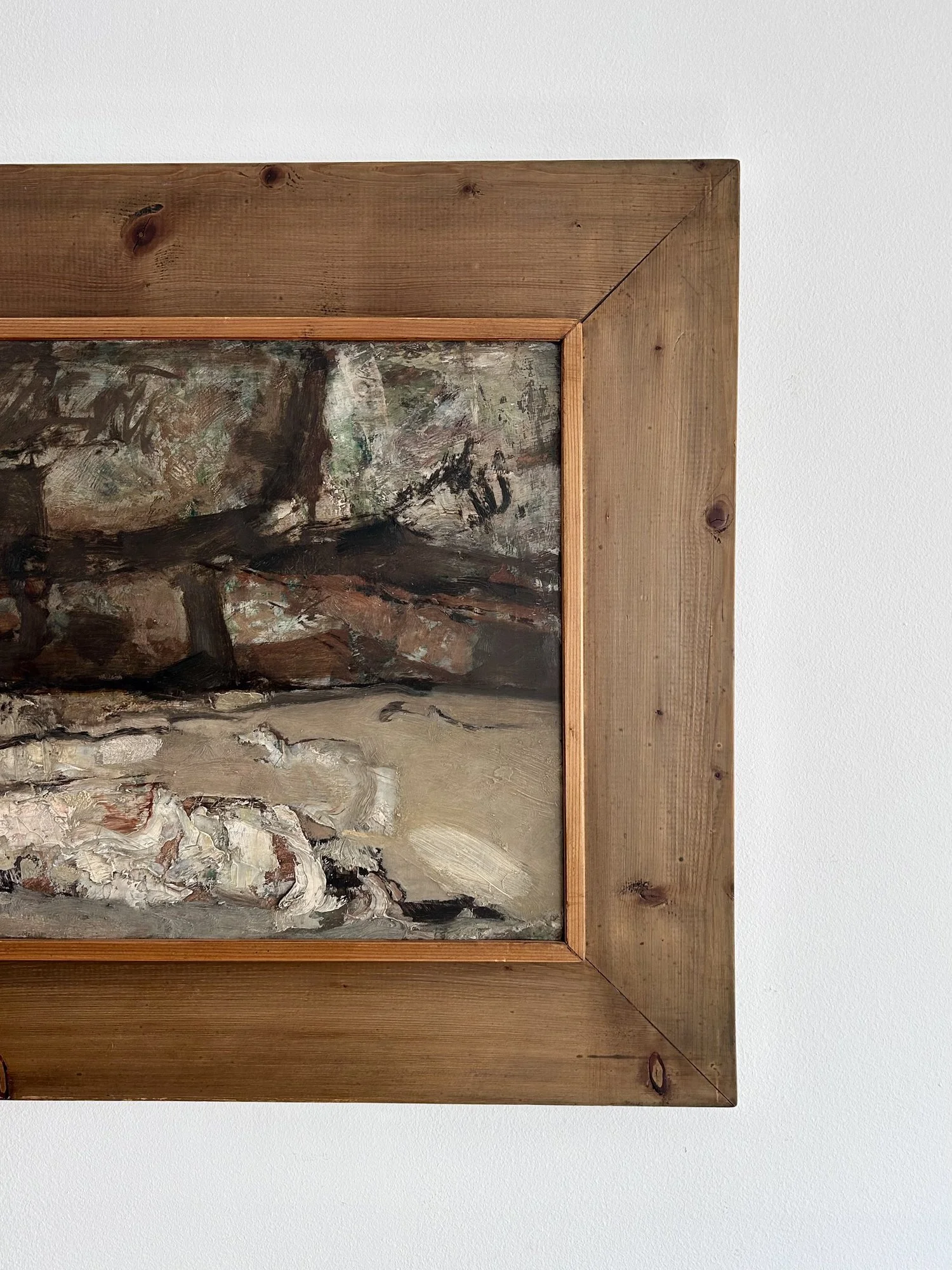 Image 3 of 8
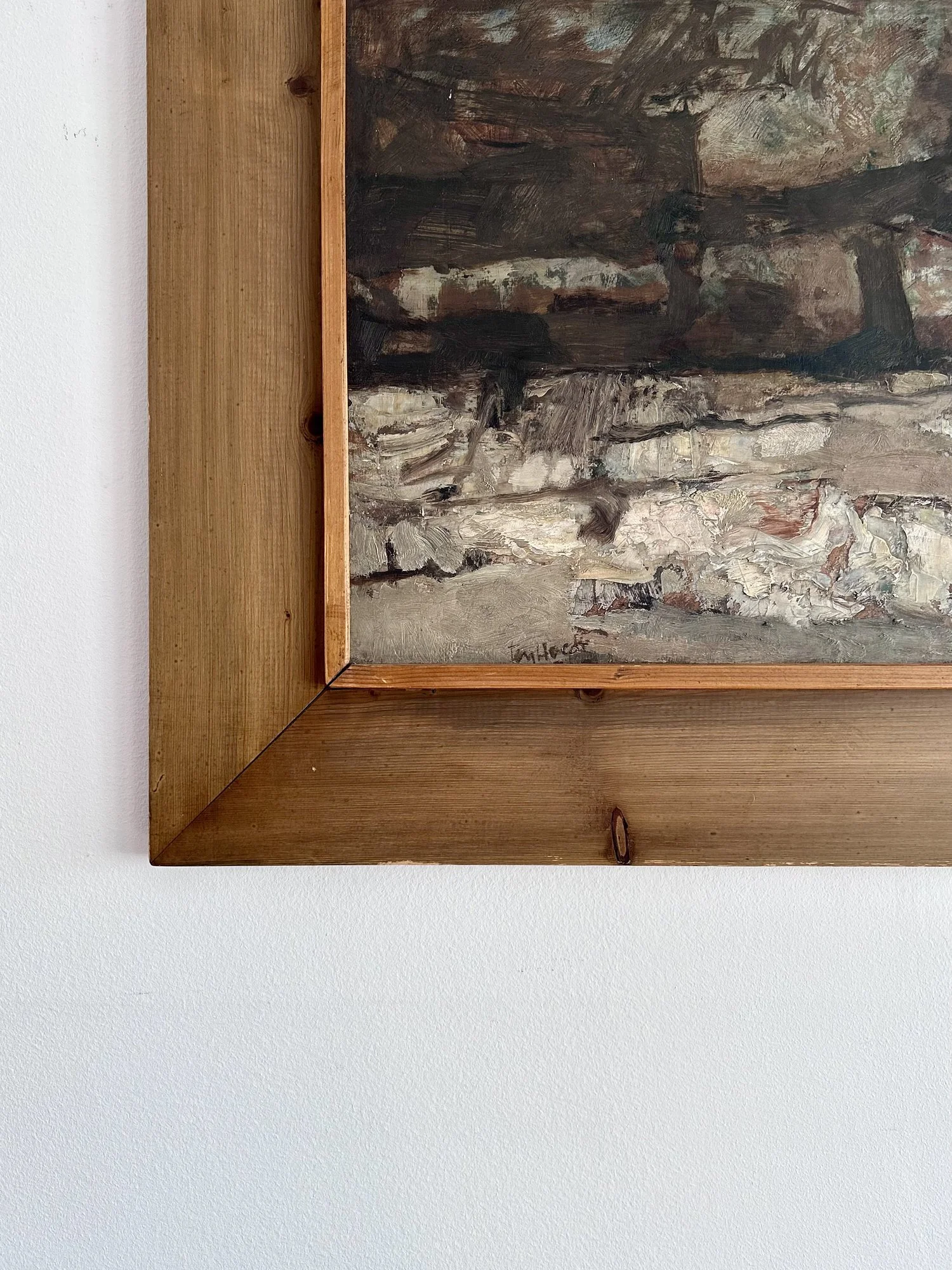 Image 4 of 8
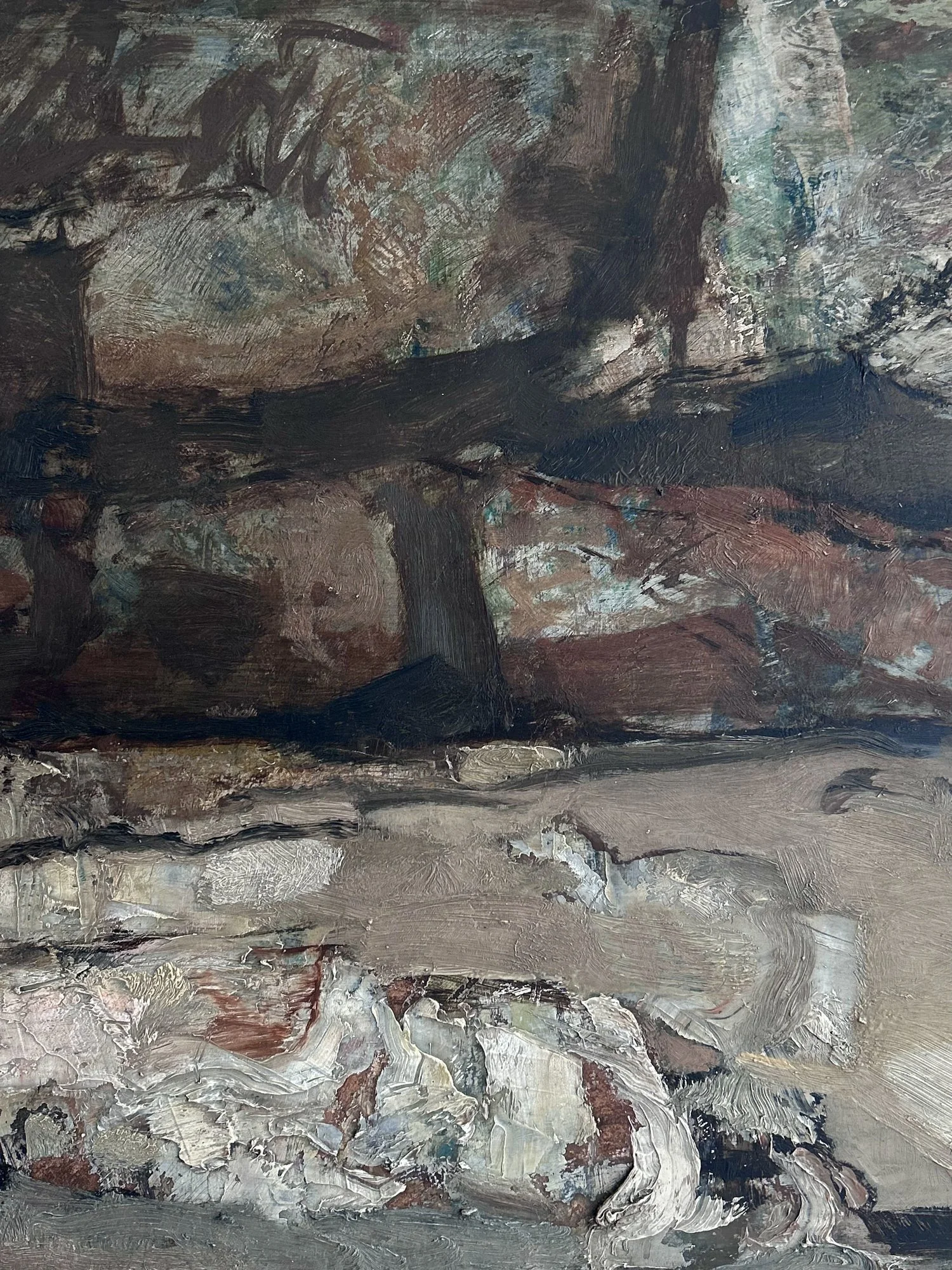 Image 5 of 8
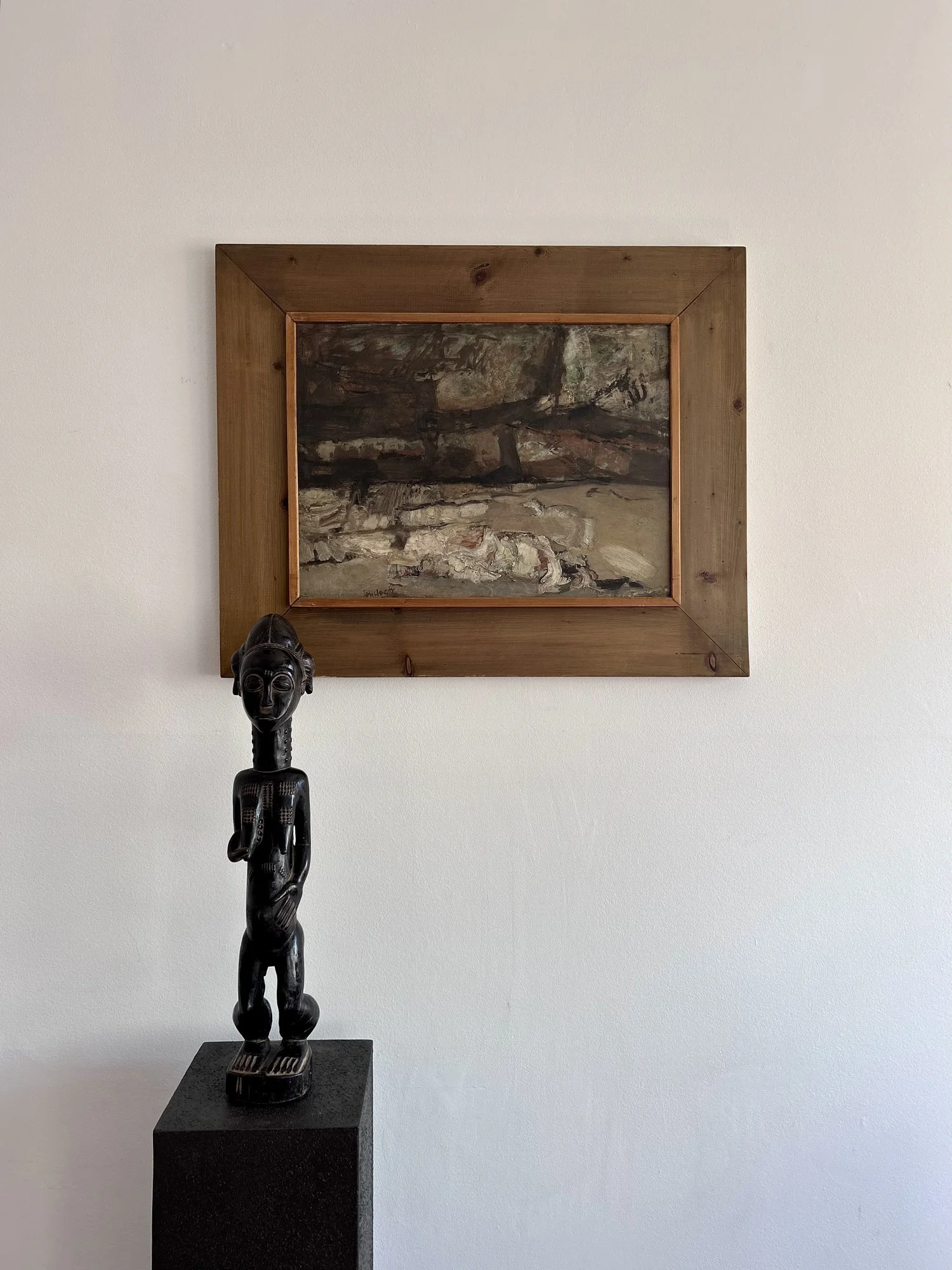 Image 6 of 8
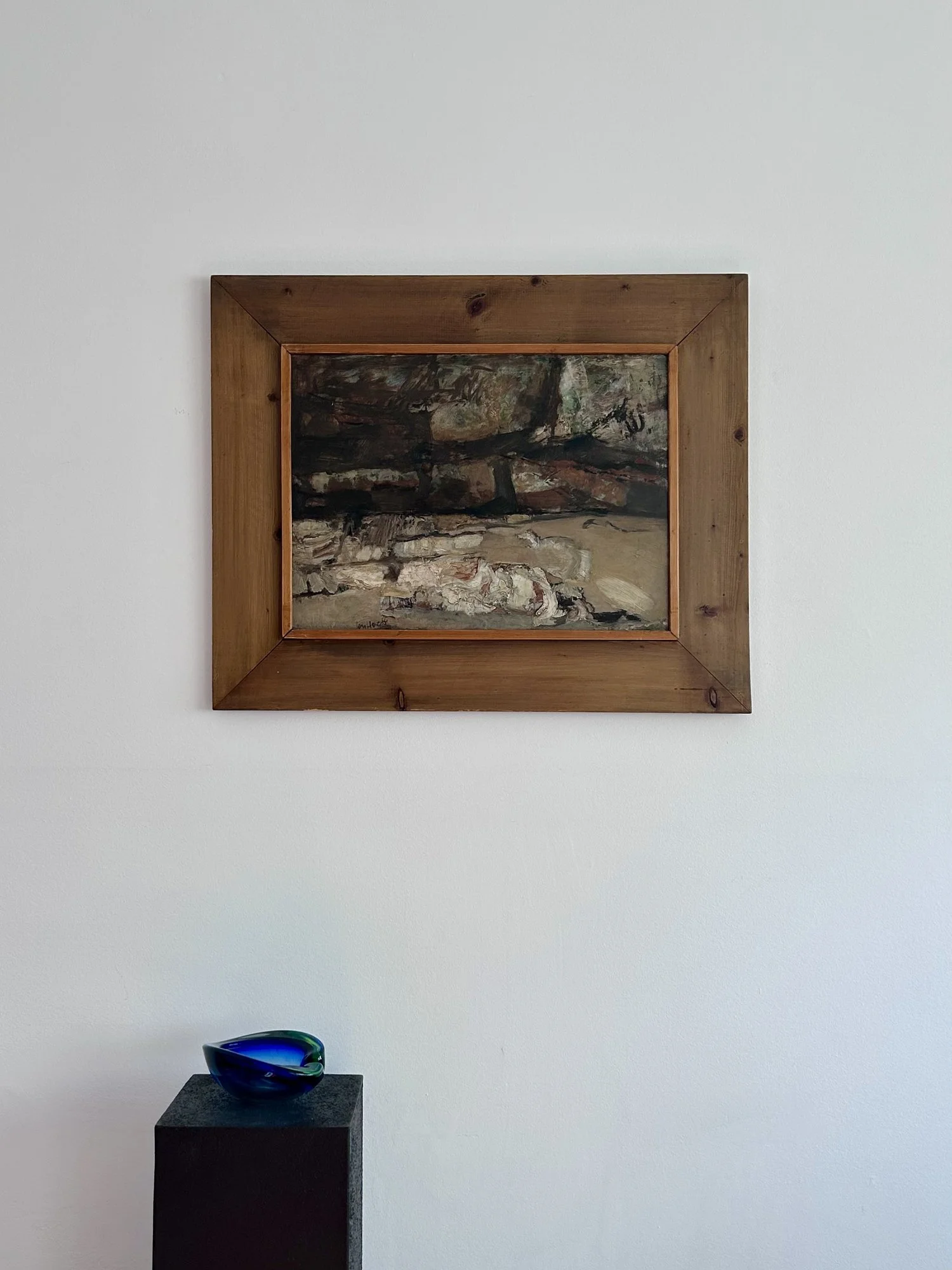 Image 7 of 8
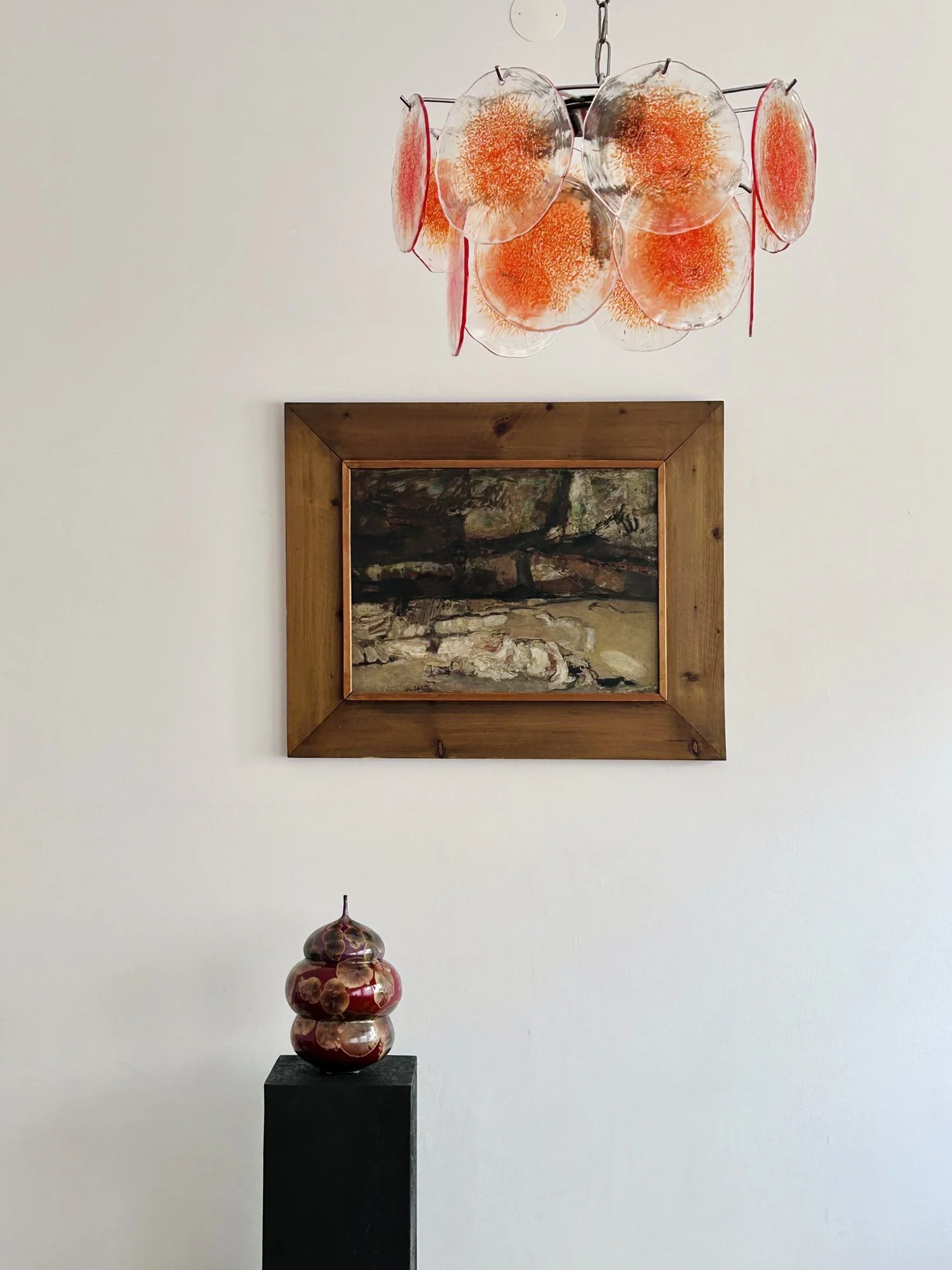 Image 8 of 8